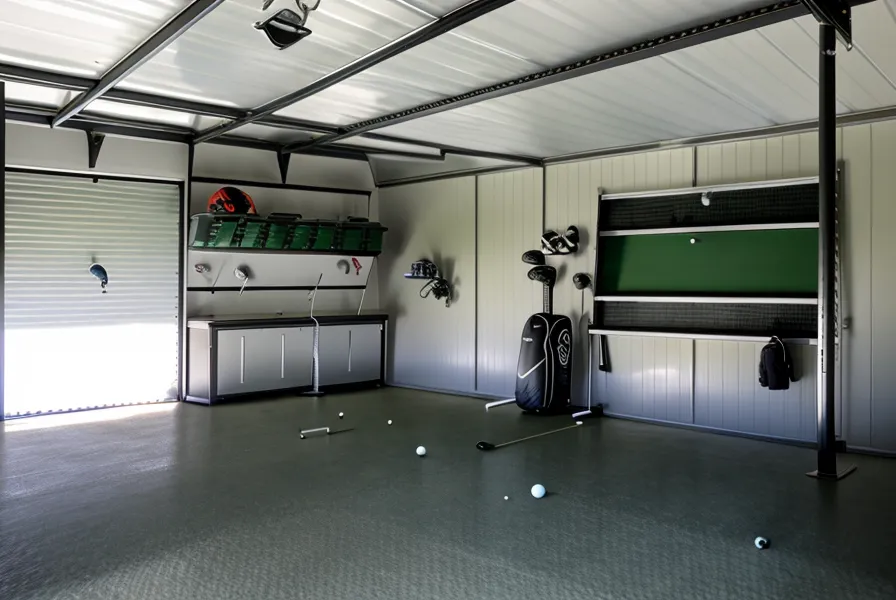
Fourteen headcovers hang from a pegboard strip along the back wall of my garage simulator bay, and not one of them has ever touched a fairway. That's the short version of how golf collectibles took over a space that used to just be indoor golf gear: a launch monitor, a mat, an impact screen, and nothing else worth looking at twice. Golf collectibles like SWAG Golf's limited headcovers turned a working hitting bay into something that actually looks like somebody spends real time there.
A quick note on how this site works before the headcover talk: clicking through to a product like SkyTrak Golf and buying something earns me a commission, and the price at checkout doesn't change either way. I only write about gear and collectibles I've actually run through my own garage simulator setup, which is why some of this gets unflattering paragraphs. Fourteen handicap, bad knee, no swing-coach credentials -- just somebody who tracks what earns space in a two-car garage and what gets boxed up.
My Hitting Bay Worked Great and Felt Like Nothing
Ceiling height and swing clearance are the first real constraints on anything you hang near a hitting area in a two-car garage, long before you get to style -- it's the same math behind the simulator reality check most first-time builders only run into after a driver finds something it shouldn't. I'd worked through that part of the build already: launch monitor dialed in, a mat that held up, and a bundle from Indoor Golf Shop that got the enclosure and screen sorted without chasing six different vendors. None of that gives a room any personality, though. A bay that's technically correct can still feel like you're hitting balls inside a server closet.
Personalizing that kind of space is trickier than it sounds. You can't hang anything fragile three feet from where urethane balls travel at speed, and most wall art doesn't belong anywhere near an impact screen. Headcovers turned out to be the answer -- small, durable, swappable, and exactly the kind of detail that makes a customized hitting bay look like somebody's hobby room instead of a storage unit with a screen bolted to one wall.
What It Actually Takes to Land a SWAG Golf Drop
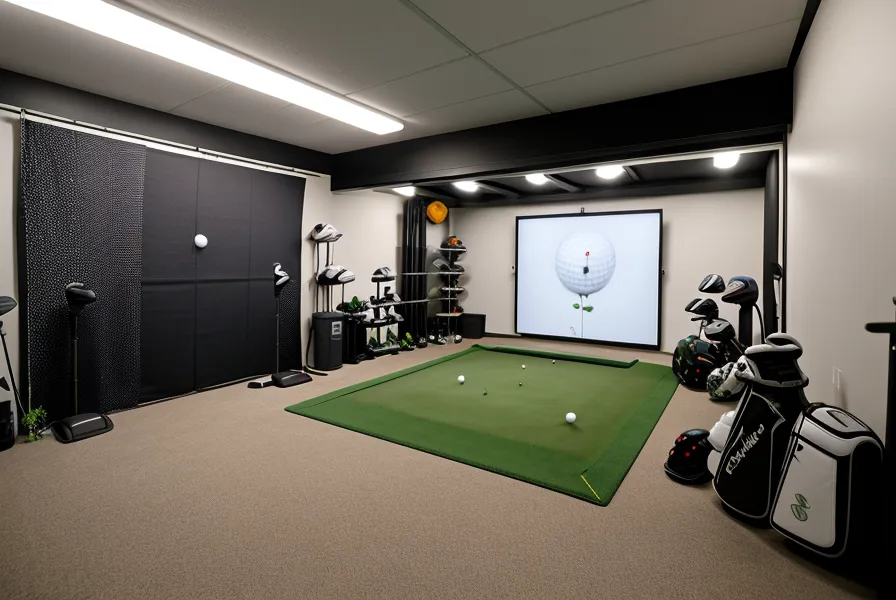
Landing one of the limited runs is less about golf and more about being ready the second a countdown hits zero. SWAG Golf runs its headcover releases the way a sneaker drop works -- a set time, a limited batch, and a "Sold Out" button that can appear in under a minute if your account isn't already logged in with payment saved. I missed the first two I tried for exactly that reason, sitting there refreshing a few seconds too late both times. Someone in the Cincinnati Golf Simulator Discord, a guy named Nate Grullón who's mid-build on his own single-bay setup, tipped me off that the real trick is keeping the product page loaded and refreshing it directly rather than waiting on a notification email that can lag thirty seconds or more. That's the entire strategy: stay logged in, keep the page open, and don't trust the alert.
Headcovers Don't Change What the Launch Monitor Reads
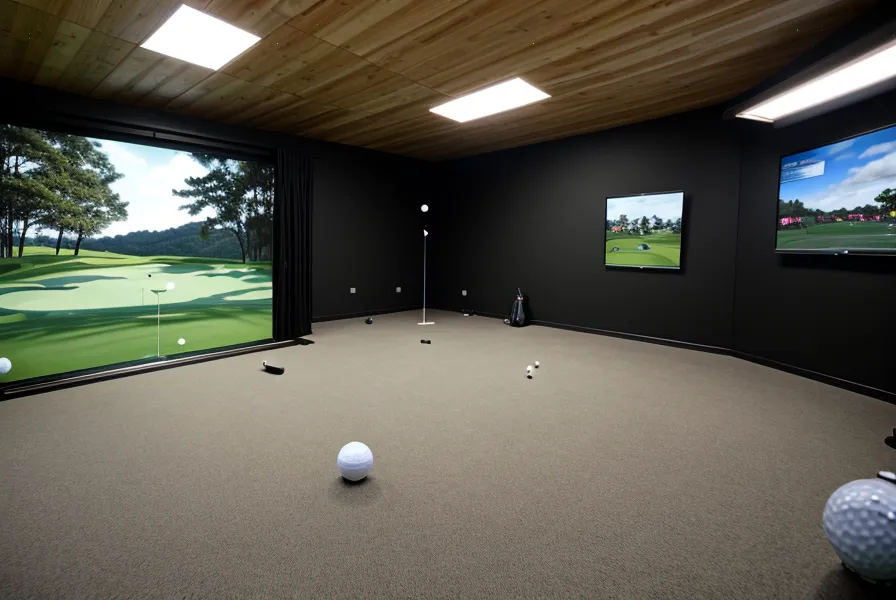
No, not even a little. Running virtual rounds at Pebble Beach on a Tuesday night is a nice break from staring at ball speed and spin numbers, but the headcovers on the shelf behind me have nothing to do with whether those core metrics -- launch angle, spin rate, carry distance -- show up accurately in the first place. A putter living under a SWAG headcover is milled from 303 stainless steel, which is the standard for a premium milled face and genuinely changes how a ball rolls on a real green, but that has zero bearing on what a launch monitor reports for a driver or a 7-iron. Carry numbers don't care what's sitting on the shelf next to the mat. I found that out for real on an evening I wasn't even trying to prove anything: the monitor read 156 yards carry on a 7-iron, and that's the exact number printed on the scorecard for a hole I've played dozens of times at Lunken Airport Golf Course on Cincinnati's East End. Decoration doesn't move that number one yard in either direction -- only the swing does. My buddy Conrad, who's got his own setup, is usually the one who points out when I'm spending money on something that doesn't move a single number on either of our monitors, and he's not wrong about this one.
Protecting a Milled Putter From the Garage's Own Microclimate
Heat and humidity do more damage inside a garage simulator bay than most people expect, and it has nothing to do with the weather outside. A launch monitor and a projector both throw off real heat, and when that meets a humid stretch of summer in a sealed two-car garage, you get swings in moisture that a shelf full of metal doesn't love. Faint spotting showed up on the stainless face of my own putter after I left it, cover and all, close to the projector's exhaust fan during a stretch of humid weeks -- the cover kept the shelf looking good and quietly turned into a small greenhouse around the metal underneath. The fix wasn't complicated: keep the headcovers on display, but store the actual putter somewhere dry, away from anything that generates heat. Where that shelf sits matters for a second reason that has nothing to do with humidity -- it needs to sit outside the radius of a mis-hit, the same way the impact screen itself needs room to absorb a direct hit the way a trampoline needs room to flex instead of staying flat. I learned that the expensive way with a screen, not a headcover: a foam-padded panel I tried early on split clean along the seam by the third bucket of balls, and no amount of careful shelf placement would have saved it from a shank with real speed behind it. Anything displayed near a hitting bay gets the same two questions asked of it: can heat and moisture reach it, and can a bad swing reach it.
Deciding How Much of the Budget Goes to Swag
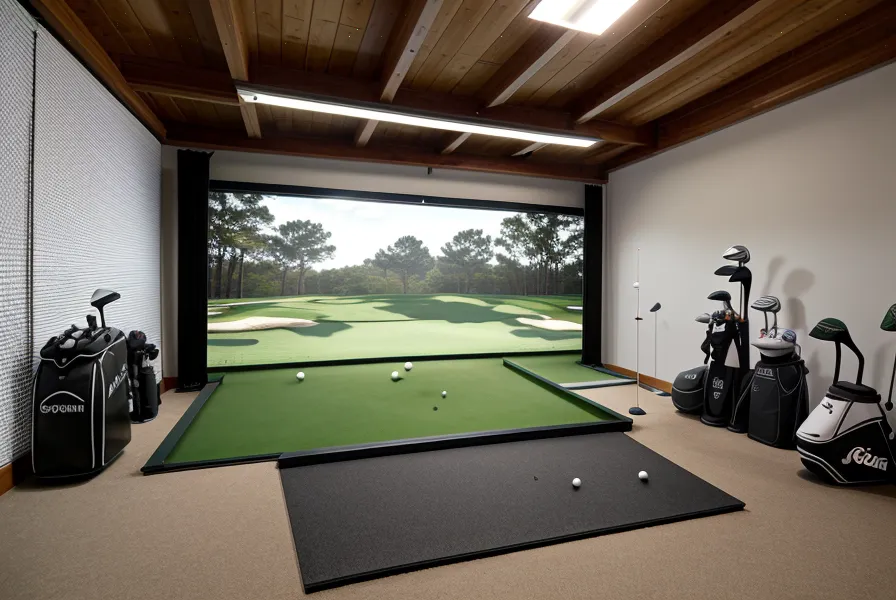
None of this replaces an actual budget line for launch monitor, net, mat, and screen -- those come first, every time, and that priority order shouldn't change just because a drop clock is running. What I do now is treat collectibles as a small, separate carve-out from the core build budget rather than letting it creep into gear money, which keeps the whole hobby from quietly ballooning past what the build itself cost (my wife's freeze on new hardware purchases technically only covers SIM gear, a loophole I'm not in a hurry to point out to her). For the boring stuff that keeps a bay running between drops -- practice wedges, extra balls, a backup glove -- Golf Direct Now covers it without the countdown-clock stress, though a generalist retailer's return policy on simulator-specific gear is worth checking before you assume it matches a specialty shop's. The headcovers never lowered my handicap and never will. What they changed is whether I want to be out there on a Tuesday night at all, and that's worth more than a plain black cover ever was.