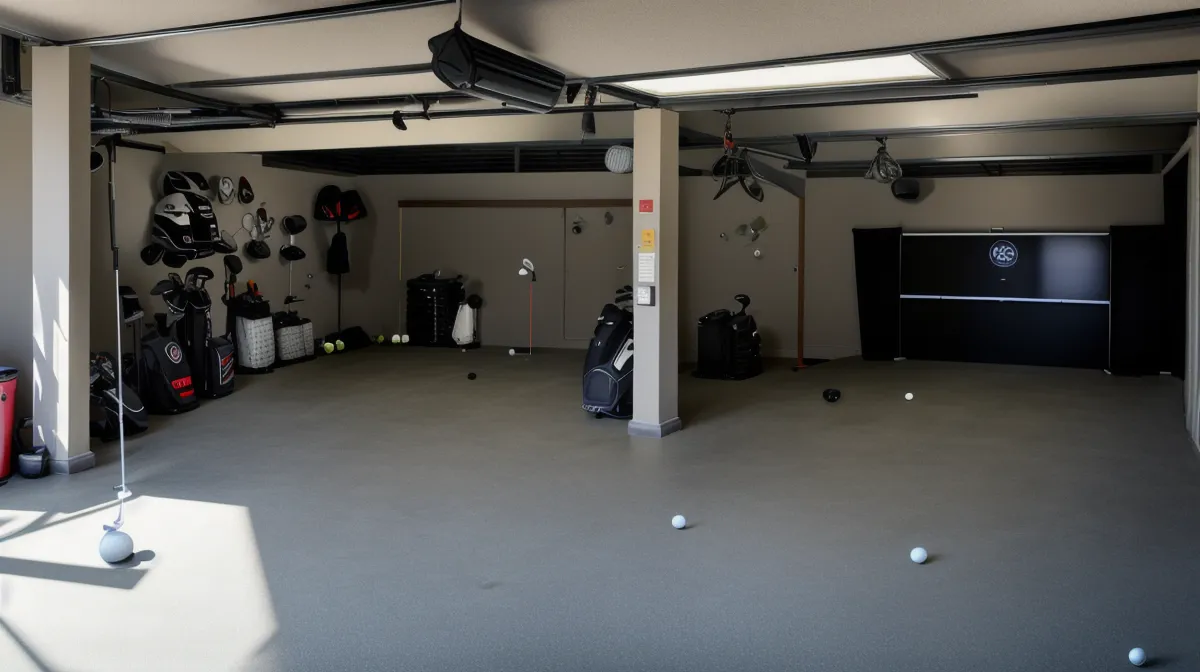
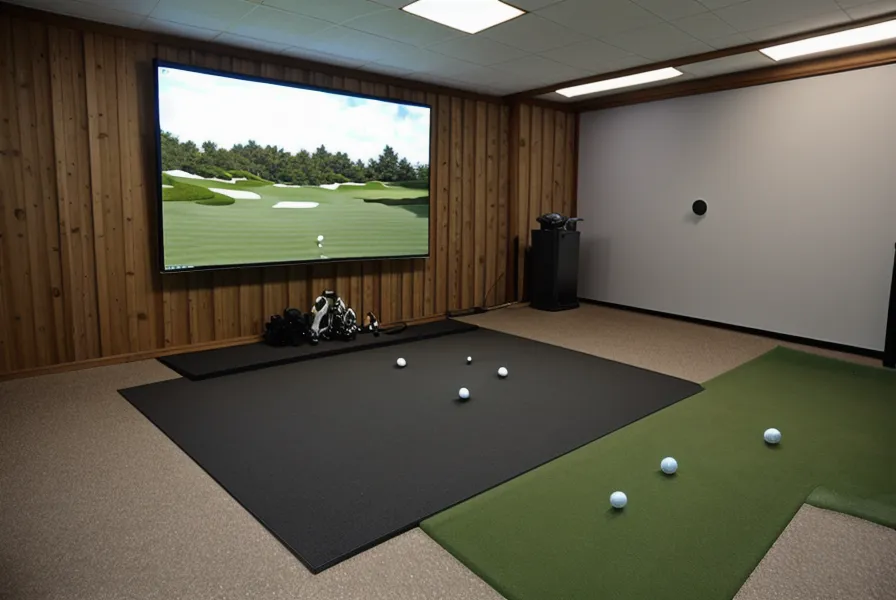
One cold Tuesday evening last November, I finished eighteen holes at Pebble Beach (a standard par 72, though my scorecard rarely reflects that) and realized something weird. I didn't have that sharp, stabbing flare-up in my lead knee that usually ends my day by the ninth green at the local muni. I was standing in my half-cleared two-car garage, staring at a white impact screen, and for the first time since my 2023 surgery, I felt like a golfer again.
Quick heads-up before we get into the weeds: if you click a link here and buy a launch monitor or a mat, the vendor sends a commission my way at no extra cost to you. I only talk about gear I have actually beaten up in my Cincinnati garage, including the stuff I sent back because it felt like hitting a brick wall. My wife has technically banned new simulator purchases until December 2026, so I am currently living vicariously through my own spreadsheets.
From 2 AM YouTube Binges to the Spring 2024 Build
After the 2023 surgery, my game went off a cliff. I dropped from thirty-six holes a weekend to maybe nine holes once a month, usually ending in a bag of ice and a lot of Ibuprofen. I spent most of late autumn 2023 watching simulator build tours at 2 AM, trying to figure out if I could actually fit a hobby in the space currently occupied by a lawnmower and three bins of holiday decorations. I finally pulled the trigger on a SkyTrak Golf [Garage Pick] in the spring of 2024.
Setting it up was a bit like trying to install a home theater that occasionally gets hit by a 70 mph projectile. You need roughly 9 feet of ceiling height to clear a driver (unless you enjoy patching drywall), and enough depth for the ball to travel before hitting the screen. It turns out a standard US two-car garage is actually the sweet spot for this—usually providing the 10-12 feet of depth required for a safe enclosure. I spent about five grand getting it all together, which sounds like a lot until you realize it’s basically the cost of two years of physical therapy and greens fees I was too hurt to use.
The Trial of the Mats: Saving the Joint
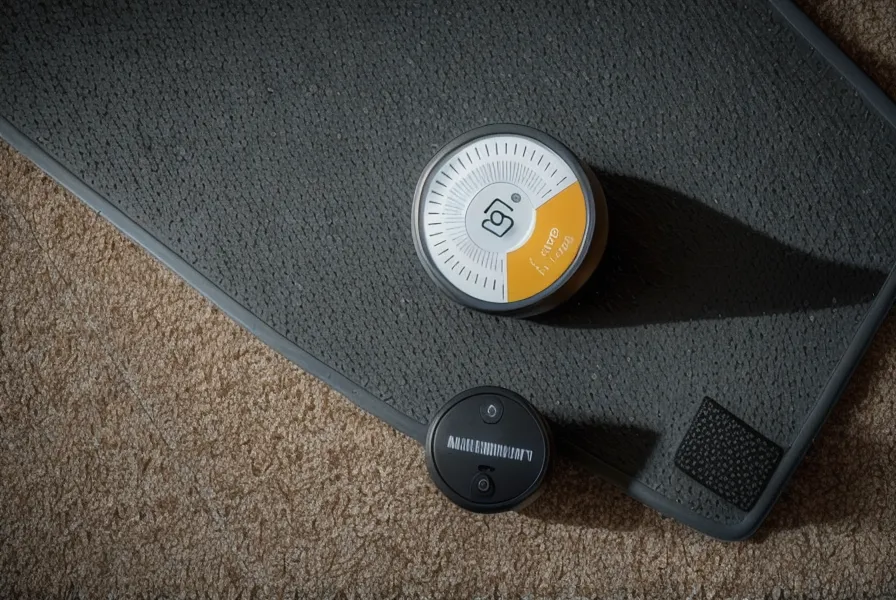
The biggest hurdle wasn't the software; it was the floor. When you have a reconstructed knee, hitting off a cheap driving range mat is like jumping off a ladder onto concrete. I went through three different mats before finding the right one. The first two were basically thin layers of green felt over hard rubber—I returned them within a week because the vibration felt like a tuning fork going off in my shin bone. (My wife’s reaction to the third large box arriving in the driveway was a level of skepticism I haven't seen since I tried to brew my own beer.)
I eventually sourced a SIGPRO mat from the Indoor Golf Shop [Bundle Source]. It’s thicker, softer, and actually lets the club head travel through the surface rather than bouncing off it. It’s the difference between a high-end yoga mat and a sidewalk. This was the turning point in mid-February during a snowstorm when I realized I could hit 100 balls without swelling. If you are building this for recovery, do not skimp on the mat. Your 14 handicap won't matter if you can't walk to the fridge afterward.
Data Over Guesswork: The Photometric Advantage
By early June, before the humidity really peaked, I started noticing that my swing path had changed to protect my knee. I was sliding instead of rotating. On a dark driving range, you just see a ball disappear into the night. With the SkyTrak ST MAX, which uses a combination of a photometric camera and dual Doppler radar, I could actually see the data. Recovering the Game: How My Garage Simulator Replaced the Back Nine After Knee Surgery was less about vanity and more about seeing that my 7-iron carry had dropped ten yards because of my poor weight transfer.
The photometric tech captures high-speed images of the ball's dimples to calculate spin and launch angle. For a guy like me, seeing a 3-degree inside-out path on the screen helped me realize I wasn't 'fixing' my swing—I was compensating for a lack of mobility. Having that data at 10 PM on a Thursday is like having a club fitter in your pocket, minus the hourly fee. I even started practicing my short game with a premium putter made of 303 stainless steel from SWAG Golf [Putter Upgrade] just to keep the feel in my hands while the knee rested.
The Silent Garage: Thinking Like a Renter
One thing I didn't expect was the noise. While I have a garage, I have neighbors who don't appreciate the sound of a driver hitting a ball at 120 mph ball speed while they are trying to watch the news. I had to pivot to a 'quiet' setup, much like what apartment renters with strict noise ordinances use. This meant switching to a heavy-duty polyester impact screen that absorbs the sound rather than snapping like a bedsheet. It turns out, making the simulator quiet also made it more 'wife-approved,' which is the only reason I'm still allowed to play Pebble Beach in my gym shorts.
I also checked out Golf Direct Now [Generalist] for some foam tiles to put under the turf. It’s a suburban hack—if you can dampen the vibration into the garage floor, the sound doesn't travel through the house frame as much. It’s about being a good neighbor while you're grinding away on your SkyTrak alignment in the middle of a Tuesday night.
Reflections from late August
Looking back from late August after a long workday, the simulator didn't just give me a place to play; it gave me my mobility back. I’m still a 14 handicap, and I still occasionally shank a wedge into the side netting, but I’m doing it without the limp. The garage setup has been a more consistent rehab tool than any exercise bike I’ve ever owned. The Midlife Sim Build: What Actually Works After a Year in My Cincinnati Garage has taught me that the best gear isn't the most expensive—it's the stuff that actually keeps you swinging.
If you're sitting on the fence (or on the couch with an ice pack), start with a solid launch monitor like the SkyTrak Golf [Garage Pick]. It’s the foundation. Just make sure you measure your ceiling twice before you take that first full rip with the driver. Trust me on that one.