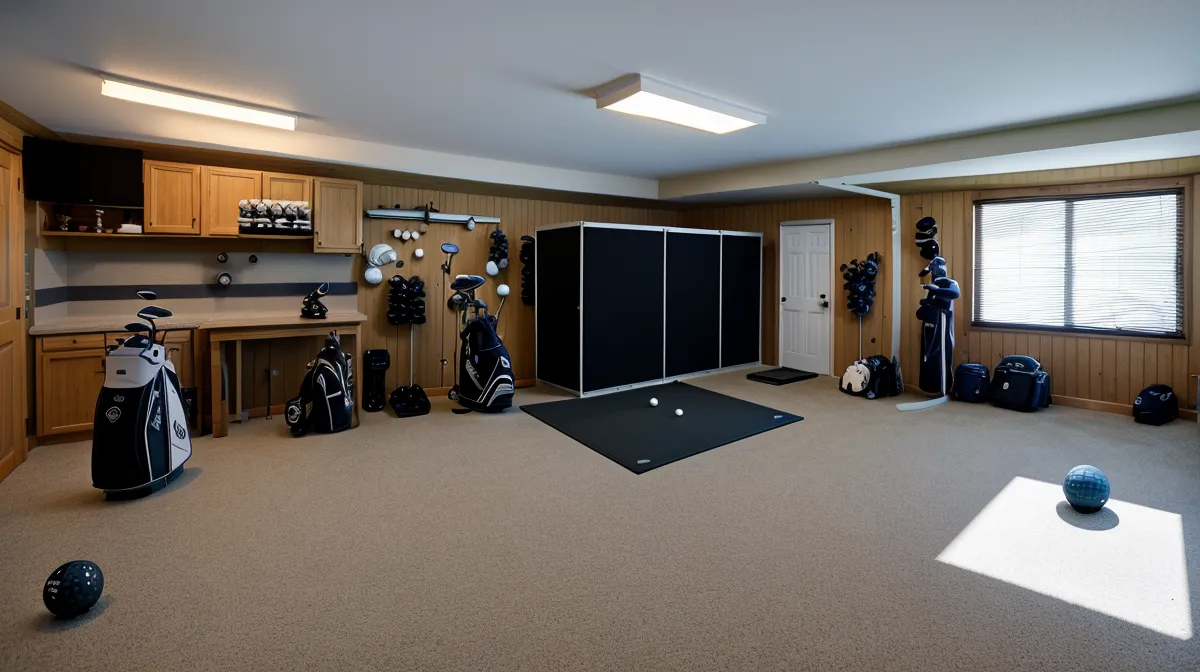
Standing in my garage one chilly evening last November, I hit what felt like the absolute best 7-iron draw of my life, only to watch the screen register a 20-yard slice that ended up in the virtual woods. It is a specific kind of madness when your body tells you one thing and the five-thousand-dollar pile of electronics in front of you says you are a liar. I am a 14 handicap who just wanted to play Pebble Beach in my socks after the kids went to bed, but for months, I was fighting a 'garage fade' that didn't actually exist on the real course.
The IT Manager’s Trap: Trusting the Hardware Too Much
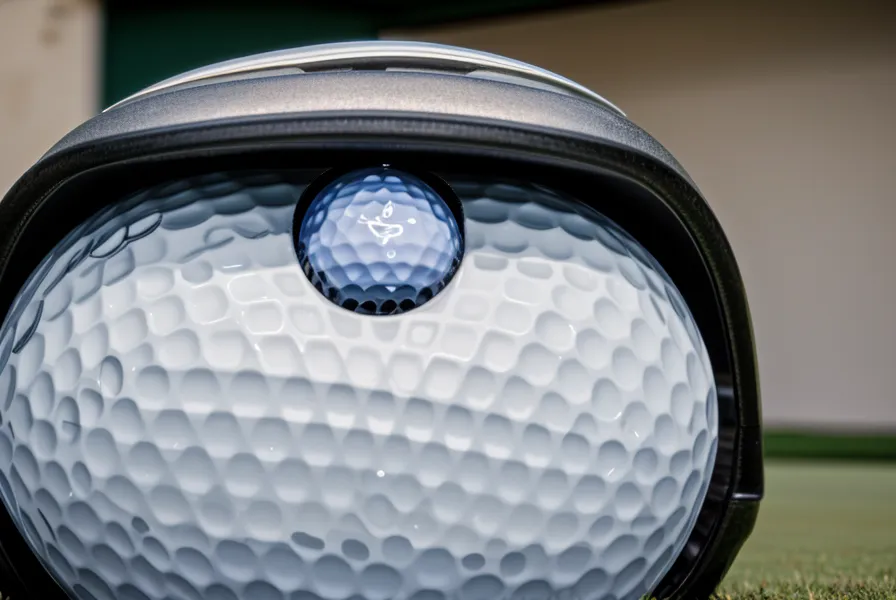
Because I spend my days managing IT operations, my first instinct is always to trust the data output more than my own internal hardware—which, after a 2023 knee surgery, feels about as reliable as a 15-year-old server. I assumed my swing had just disintegrated into a weak, over-the-top mess during my recovery. I spent weeks trying to 'fix' a swing that wasn't actually broken, ignoring the fact that a USGA standard golf ball is only 1.68 inches in diameter and the high-speed camera in a photometric launch monitor is trying to track its spin to a sub-millimeter degree of accuracy.
I realized I was chasing a ghost. I’d be out there in the silent, midnight garage, surrounded by the smell of fresh rubber floor mats and the faint, steady hum of the projector fan, trying to figure out why a pure strike felt like a mishit. I even started looking at five-figure launch monitors, thinking maybe my mid-range unit just wasn't up to the task. But here is the truth: chasing more expensive hardware is often just buying more data noise for an amateur who can’t repeat a swing anyway. If the foundation is crooked, a twenty-thousand-dollar unit will just tell you you’re crooked with more decimal places.
The 0.125-Inch Problem
Mid-February during a snowstorm, I finally stopped blaming my hands and started looking at the floor. Most residential garage floors are built with a specific drainage slope—usually around 0.125 inches per foot—to ensure rain or melting snow from your car runs toward the door instead of into your kitchen. In a two-car garage like mine, that subtle pitch is invisible to the eye but catastrophic for a launch monitor. If your hitting mat and your sensor aren't on the exact same plane, the horizontal launch angle is doomed from the start.
I had my unit sitting on the concrete while my ball was on a thick hitting mat. That tiny height difference, combined with the slope, meant the sensor was looking 'up' at the ball at a slight angle. I spent two hours trying to fix a 'push' in my swing before realizing the launch monitor had physically slid two inches on the carpet remnants I used to dampen the sound. It doesn't take much to turn a straight shot into a virtual disaster when you're dealing with a device that relies on a precise photometric capture window to calculate side spin.
The Leveling Epiphany
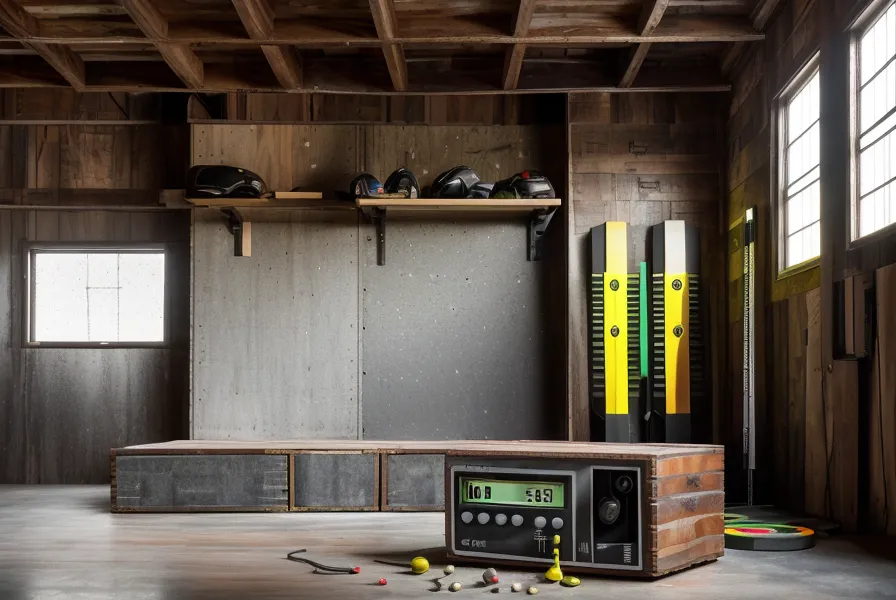
After about six weeks of testing different heights and shims, I stopped trying to align the unit with the garage walls. Garage walls are rarely actually square, and following them is a recipe for a permanent pull-hook. I went to the hardware store and bought a simple spirit level and a cheap laser line. I stopped caring how the setup looked to my neighbor over the fence and started focusing on making the sensor perfectly parallel to the hitting strip, regardless of where the garage door was.
I ended up building a small leveling platform for the unit using some scrap plywood and adjustable furniture feet. It cost me maybe twenty bucks in hardware, which is a lot better than the four-hundred-dollar 'professional' leveling bases I saw online. I also had to deal with the lighting; as I learned while fixing my garage lights for better accuracy, those overhead shop LEDs can create flickers that confuse the high-speed cameras. Once the unit was level with the mat and the lighting was stabilized, the 'garage fade' vanished instantly.
Back to Pebble Beach
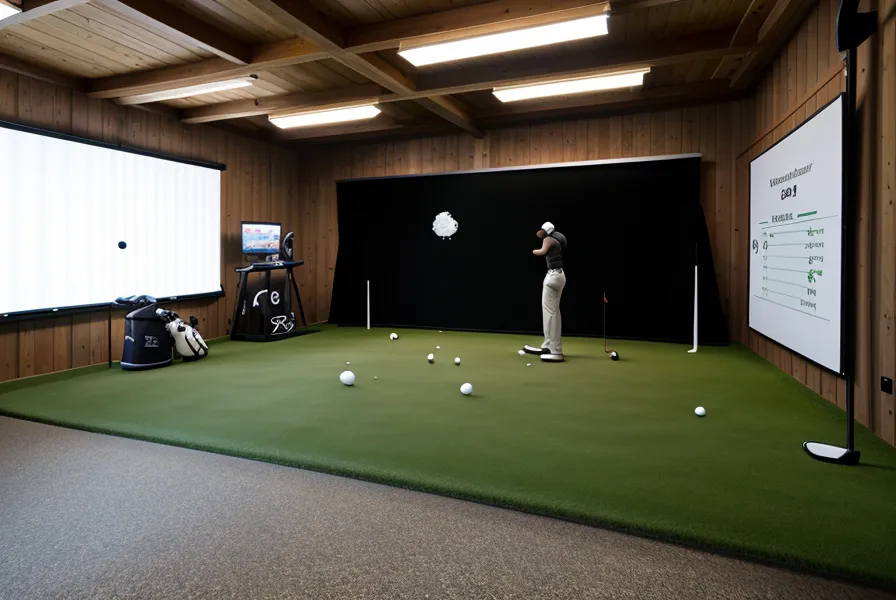
Late last month, I finally felt like I was playing the same game indoors as I do on the grass. My 7-iron carry is back to a predictable 155 yards, and when I see a draw on the screen, I actually felt the clubface close at impact. It turns out I didn't need a swing coach or a three-thousand-dollar driver; I just needed a level surface and a little bit of IT-style troubleshooting. I've even found that mixing specialist bundles with generalist gear like my DIY leveling base is the only way to keep the budget under that five-thousand-dollar mark my wife is currently monitoring with hawk-like precision.
Now, on Tuesday nights, the ball flight finally matches the feeling in my hands. If you are seeing a consistent miss in your sim that you don't see on the range, stop looking at your wrist hinge and start looking at your floor. A 0.125-inch slope is enough to ruin your night, but a few shims and a spirit level are all it takes to reclaim your game. Just don't tell my wife that the fix was essentially free, or she might move up that 2026 ban on new gear.