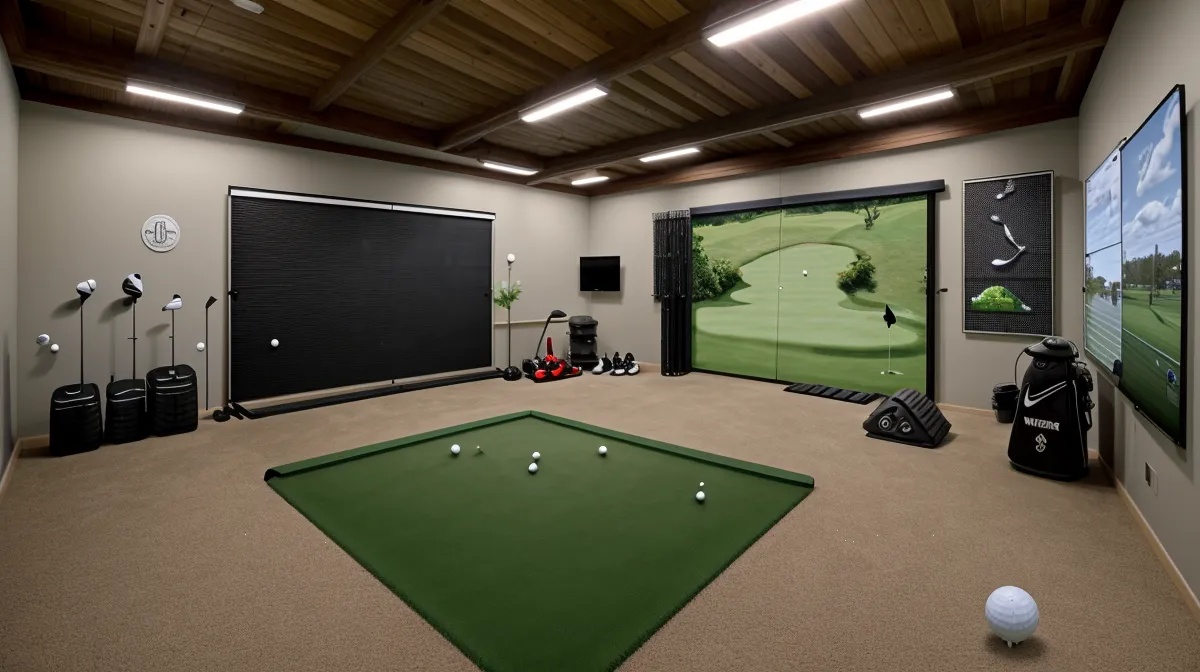
The ball comes off the hosel wrong before I even feel it in my hands, a low screamer that skips past the screen and buries itself in the side netting instead of the drywall behind it. That's the entire case for taking simulator safety seriously in any garage golf build: the difference between a net doing its job and another drywall patch comes down to buffer space and the right kind of mesh, not luck. This isn't a story about my SkyTrak setup getting more forgiving with practice; my hands still find the hosel more often than I'd like. It's a comparison of the two real ways garage builders keep a shanked shot from becoming a wall repair, and which one actually earns its square footage of indoor golf protection.
Every product mentioned below is something I've actually bolted, clipped, or freight-shipped into a suburban Cincinnati garage, not a spec sheet summary. When a vendor link on this site turns into a purchase, that vendor pays a commission, and I only recommend gear that has taken a real swing at it.
Full Enclosure or Side Netting: Which Indoor Golf Protection Actually Works?
Picture the setup like a home theater screen built to take a direct hit instead of just displaying pixels: a golf simulator aims a ball at a screen at speeds a movie screen was never designed for, and the material in front of you only covers the middle of that swing path. Anyone who has checked their minimum garage ceiling height of 9 feet and felt good about clearance has usually not thought about the sides yet, a full swing doesn't just go up, it goes wide, and a standard impact screen leaves both edges of the bay wide open. That gap is where the real comparison starts: do you close it with a structure built around the whole hitting area, or patch it with netting hung off gear you already own?
A shank that skips the screen and hits bare drywall does real damage, not cosmetic, more the kind you patch and repaint and hope nobody examines too closely. Sourcing a fix meant looking hard at the Indoor Golf Shop, which specializes in enclosures built specifically to turn an open hitting bay into a contained one. The detail nobody puts in the marketing copy is the buffer zone: the gap between the netting and the actual wall. Pin netting flush against drywall and a full-speed strike will still stretch the mesh far enough to leave a mark, the same way a trampoline mat can still bruise you if you land on the frame underneath it. Distance from the wall matters as much as the netting itself.
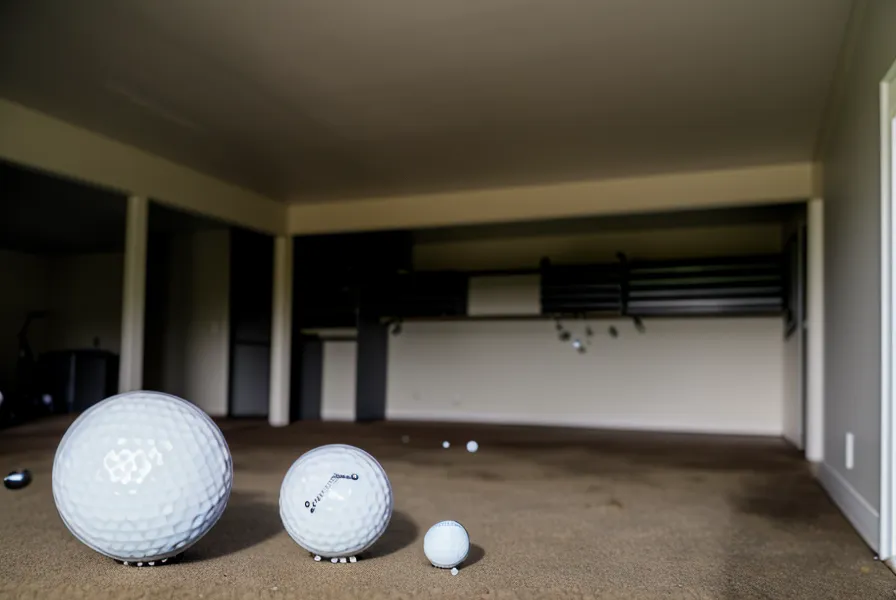
High-Density Mesh Stops the Ball, Low-Density Mesh Catches It
This is the trade-off that decides which side of the comparison you land on. High-density netting is tougher and holds up longer against repeated hits, but it also sends the ball rebounding back toward the hitting area at real speed -- mesh that doesn't give much on impact doesn't absorb much energy either. Low-density netting catches the ball softer and kills the rebound almost completely, but a mishit wedge or a hot 3-wood can eventually work a hole through the looser weave over enough sessions. Cheap materials tend to announce themselves fast either way -- the same instinct that told me a garage-sale putting mat had curled at both ends within two weeks of sitting on concrete told me to walk the netting aisle slowly instead of grabbing whatever was cheapest online. Containing a stray shot isn't just about whether the wall stays clean afterward; it's about where the ball goes once it doesn't reach the screen, and that's a decision you make before the first ball ever leaves the clubface.
The SIG12 Enclosure: Buy Once, Cry Once
Closing that gap comes down to three real options, and only one of them is a permanent structure built for the job. The SIG12 from the Indoor Golf Shop is the buy-once-cry-once route -- a full enclosure that wraps the hitting area in heavy-duty fabric and netting on every side, which settles the enclosed-bay-versus-open-bay question for good once you've paid for it, a bigger decision than netting alone and one worth weighing on its own before you buy. Shipping one is a freight event rather than a porch delivery (my wife's exact words when the pallet showed up were closer to "you ordered what"), and putting it together takes a few hours and a second set of hands, which matches what other buyers report once they commit to it. Not a Saturday I'd repeat without a helper already lined up. It effectively retires the shank-net question altogether, because the walls become part of the structure instead of an accessory bolted onto one, and it's also the priciest of the three -- nobody should pretend otherwise.
The screen itself is a separate durability question -- how long an impact screen holds up under repeated flush strikes doesn't tell you anything about what happens on a shot that misses it wide, which is the exact gap this enclosure closes. None of it matters much either if the projector image is washing out under ambient light, but that's a contrast problem for a different post, not a netting one.
SkyTrak's Clip-On Side Nets Cover the Cheap Seats
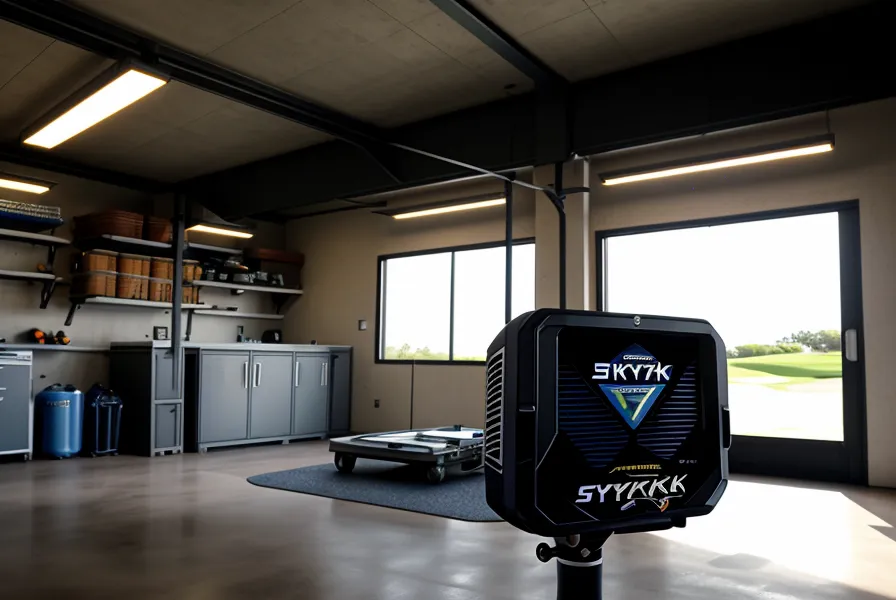
SkyTrak owners get a lighter-weight version of the same idea: side net attachments that clip onto the frame they already own instead of requiring a whole new structure. Since the SkyTrak Golf unit relies on a photometric camera plus dual Doppler radar sitting right on the floor, the mounting frame for the nets is already part of the setup, so there's no separate scaffolding to buy. These usually angle around 45 degrees off the hitting line, which happens to be the sweet spot for catching a lateral miss before it reaches full speed. Which specific metrics a launch monitor needs to nail is a separate debate worth having on its own; for wall protection purposes, this is the middle option -- more coverage than a bare net taped to a joist, less commitment than a full enclosure.
Golf Direct Now and the DIY Baffle Route
Budget builders skip both of those and rig something themselves. Golf Direct Now carries general-purpose netting that isn't simulator-specific but works fine hung on PVC pipe or ratchet-strapped to ceiling joists, provided the buffer-zone rule still applies. It's the cheapest of the three by a wide margin and the least forgiving of a sloppy install -- mount it flush to the wall and you've built an expensive way to still get a dent. Coverage runs inconsistent panel to panel, which is the real cost of the DIY route: more of your own labor standing in for what a purpose-built product already solved.
Side by Side: Enclosure vs. Nets vs. DIY Baffles
Laid out side by side, the trade-offs are easier to see than they are to explain in prose.
| Product | Best For | Wall Protection Rating | Rebound Risk |
|---|---|---|---|
| SIG12 Enclosure | Permanent Builds | Excellent | Low |
| SkyTrak Side Nets | Small Spaces | Good | Moderate |
| DIY Baffle Nets | Budget DIY | Variable | High |
Committing to the enclosure route in practice means going back to the Indoor Golf Shop for the bundle rather than sourcing netting, frame, and screen piecemeal, since their design team will lay out dimensions against your actual garage before anything ships freight.
Does a Secure Bay Change How You Actually Swing?
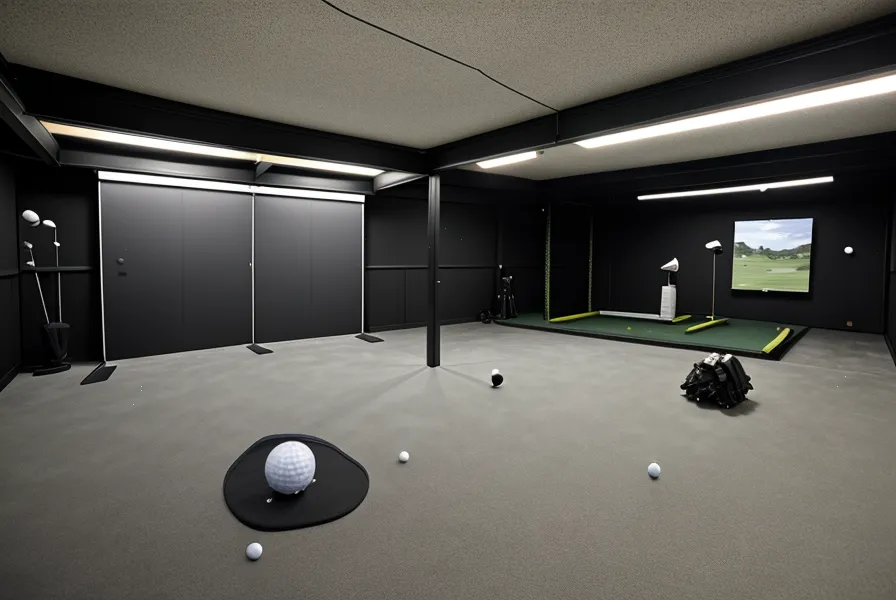
None of this is just about drywall. A 3-wood struck clean on Augusta National's thirteenth hole inside the simulator carries differently than one hit while flinching at the sidewall; the ball comes off with a flat, mid-height flight that holds its line down the fairway instead of leaking right, and that only happens when the swing finishes instead of bailing out early because some part of your brain is tracking where the miss might go. Carry distance on a mishit 7-iron looks nearly identical to a flush one on a launch monitor readout; what actually changes is where the miss lands, net or wall, and that's a stray-shot-containment question, not a swing-mechanics one. Conrad, a coworker whose own basement simulator has been running longer than my garage setup, wasn't convinced the full enclosure would do anything for my numbers that the clip-on nets hadn't already done -- he's usually the one talking me out of upgrades that didn't move anything for him first, and he had a point about diminishing returns here. How accurate that ball-flight data actually is compared to a real range session is a question for a different post entirely.
The Rest of the Bag: Push Cart and Putter
Wall protection isn't the only gear question a garage build raises, even if it's the one with the highest cost of getting wrong. On the rare weekend I actually walk a real course now, the Alphard Golf Cybercart gets consideration mostly because its Cybercart took the 2025 MyGolfSpy Best Overall award for an electric push cart, unusual for a brand outside the big three, though the battery complaints in owner reviews, including one report of a pack failing before it reached the 500-cycle warranty mark, have me waiting a season before I commit. I also picked up a SWAG Golf putter, milled from 303 stainless steel, mostly because practicing on a foam mat with a tour-spec face makes the whole garage setup feel less like a compromise. Whether a mat that soft actually does anything good for your joints over a long session is its own separate conversation, and not one this post is trying to settle.
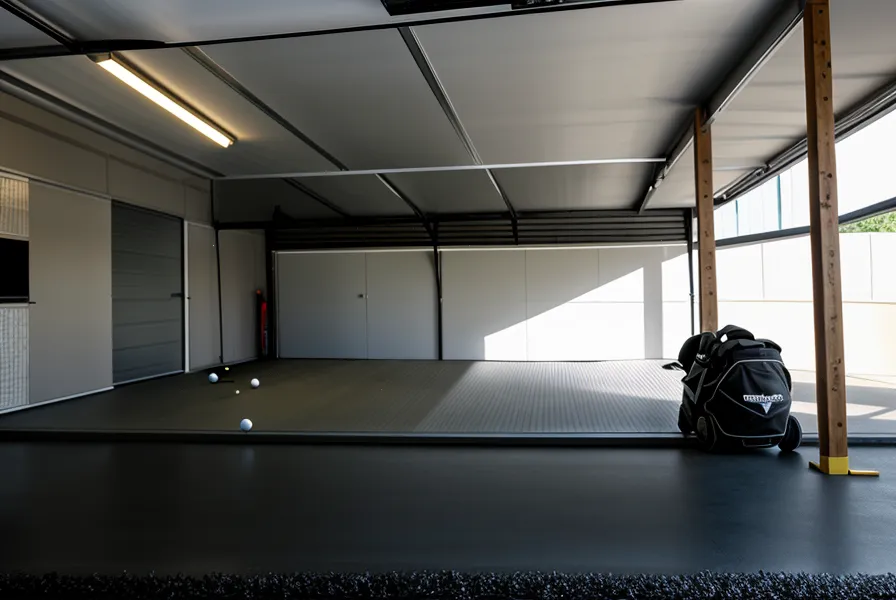
Pick the Enclosure When Space and Budget Allow, Skip It When They Don't
So here's the actual split. Choose the full enclosure when you've already committed to the space long-term, when the budget allows a single freight-shipped purchase instead of several smaller ones, and when you'd rather solve the wall question permanently than revisit it every time you upgrade a component -- pair it with a complete simulator package and the whole bay gets treated as one system instead of a pile of separate purchases. Choose side nets when you're still testing whether a garage build is going to stick, when your Indoor Golf Shop budget already went toward a launch monitor and a mat, or when your SkyTrak frame already gives you a mounting point for nets you can add without touching studs or ceiling joists. What you shouldn't choose is nothing, because a standard impact screen was never built to cover the sides, and the first shank that finds bare wall costs more in patience and drywall compound than either option does. Check your flooring options too before you commit to a heavy enclosure -- a poured slab that isn't level enough will show up in how square the frame sits, and that's a cheaper problem to catch before assembly than after it.