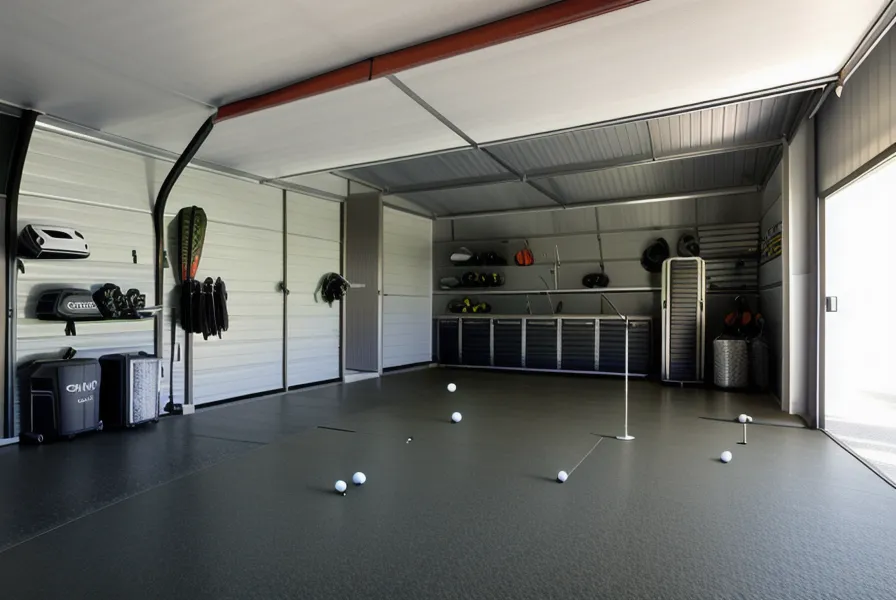
The putter face comes through clean, the ball starts dead on its line, and then it hops. Not once - twice, like a stone skipped across a pond, before it finally settles into something resembling a roll about four feet short of where I was aiming. This is indoor putting practice on a weeknight in the garage simulator I built around a SkyTrak unit, and the carpet under my feet is actively working against every stroke I take. For a guy who already picked apart his own garage simulator reality check in an earlier post, watching a five-foot putt turn into a pinball move is its own kind of humbling.
Before we get into turf density and Stimpmeter numbers, the practical part: some of the gear links on this page are affiliate links, and if you buy through them I make a commission. You pay the same price either way. I only write up stuff that has actually sat in my garage, which is also why a few of these paragraphs are less than flattering (my wife, for her part, has banned any new simulator purchases through December 2026).
Why My First Mat Made Every Putt a Guessing Game
Back when I was still rehabbing a 2023 knee surgery, my idea of exercise was a slow lap of the Little Miami Scenic Trail in Milford, not the 36-hole weekends I used to log before the surgery. The SkyTrak Golf setup had already gone in, built around half of our two-car garage, and I figured the hitting side was the hard part. Turns out the putting side was its own project. The first mat I bought was the kind of plush you would expect from a big-box bundle, and it ate the ball instead of letting it roll.
A golf ball is a small, dense object, and on that first mat it would bury itself into the fibers before it ever started rolling true. Any short putt turned into a guess about where the ball would pop back out, which is a bad way to build a stroke you plan to trust on an actual green.
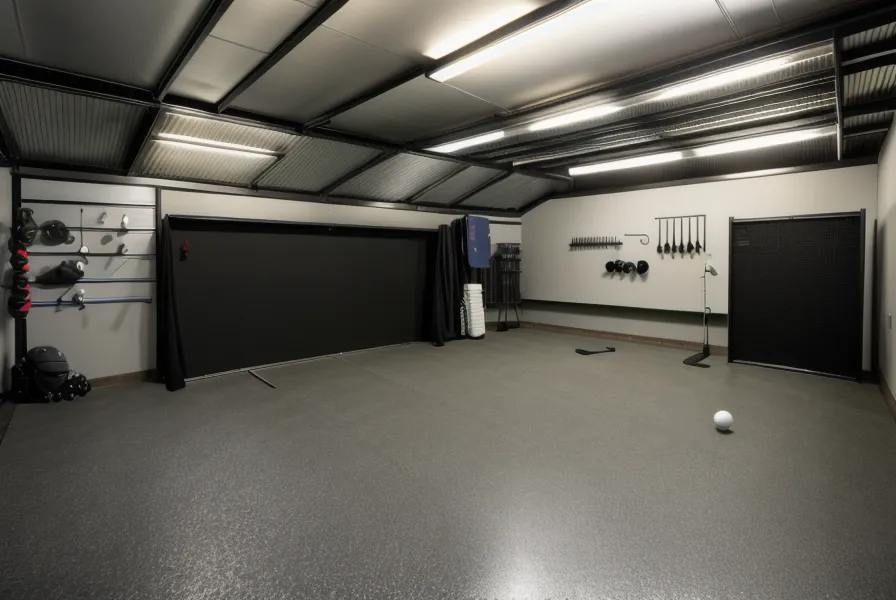
Hunting for Indoor Putting Turf That Wouldn't Lie to Me
By spring I was deep into product pages, comparing synthetic fiber specs the way I used to compare golf clubs. The SIGPRO line from the Indoor Golf Shop kept coming up in build forums, and the pitch made sense: a surface dense enough to hold a true roll without throwing a weird glare back at the SkyTrak's cameras. I will not get into how the launch monitor actually reads a putt here, since that is its own subject I have covered elsewhere, but a shiny, cheap turf is exactly the kind of thing that causes a misread.
Grain direction mattered too, since a turf that is too directional can skid a ball before it ever starts a true roll. My garage floor, like most slabs, was not level to begin with, and I will not rehash the shimming saga here since that is really a flooring post of its own - just know an out-of-level base throws off every look you take at a putt no matter how good the turf is.
Firm Beats Plush, and Here's Why
Here is the part that surprises most people: a plush, carpet-store-soft turf is not actually the better choice. Dense padding forgives a fat strike, hitting slightly behind the ball, and it will still roll out close to true, which trains exactly the wrong thing. On a real green, that same stroke dies in the first few feet. A firmer surface punishes bad contact immediately, which is annoying for about two weeks and useful for the rest of your life.
The firmer options from the Indoor Golf Shop gave me that immediate feedback. I ran a Stimpmeter across a few samples and was aiming for something in the 10 to 12 range, the speed you would associate with a tournament green. Slower than that and every putt feels like it is rolling through a hay field; faster and it starts to feel like my kitchen floor.
That lesson about not trusting a generic, one-size-fits-all part came up earlier in this build too, in a completely different spot. A ceiling-mounted projector bracket I grabbed off Amazon sagged half an inch the first time I caught a high driver with it mounted above me. Half an inch, first swing. The same principle applies to turf: the cheap generic version of anything in this garage tends to show its limits the moment you actually swing at full speed.
What Changed the Night the New Floor Went In
Getting the two surfaces level with each other took a full weekend by itself, since a step up or down between the turf and the hitting mat is rough on a surgically repaired knee. I have written before about my garage golf pivot, and this floor was the last piece of that whole project. The first ball I dropped on it made a low, muffled thump instead of the hollow plastic clack the old carpet gave off, and that sound alone told me the density was finally right.
Put in a long putting session and you will notice the projector fan step up a gear once the garage creeps past the high 60s, which is just the room doing its thing, not the turf. The bigger surprise was my knee -- a firmer, more even surface under a bad joint for an hour straight hurt less than the soft one did, though that is really a conversation about hitting mats and joints I have had elsewhere.
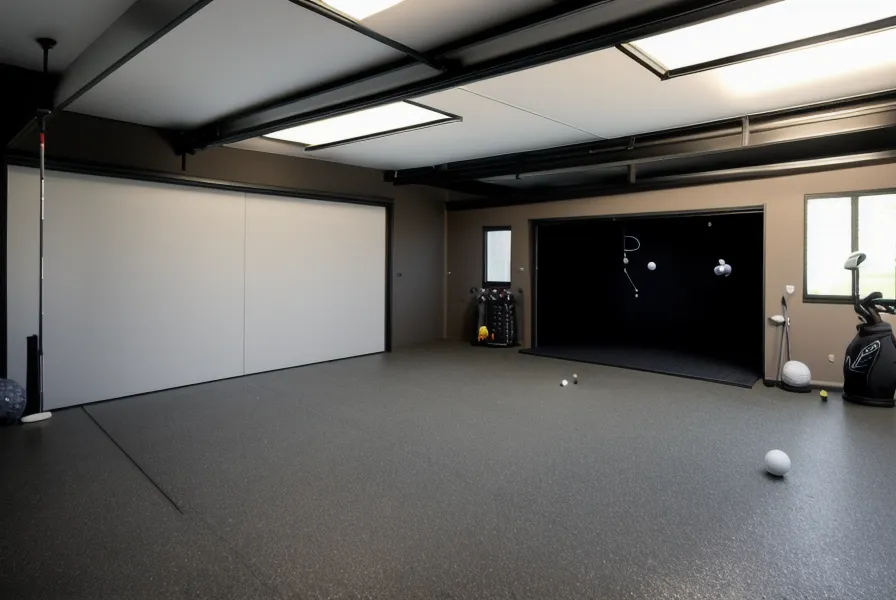
Did the SkyTrak Finally Agree With Me?
Around week eight on the new floor, the SkyTrak started picking up three-footers that the old mat used to misread entirely, a side effect, I think, of the ball actually rolling instead of hopping past the sensor's sweet spot. I have used this same unit for everything from casual Tuesday rounds to skills assessments after surgery, and that week is when the whole setup finally felt connected instead of three separate gadgets duct-taped together. I striped a 3-wood down the fairway on the sim's version of Augusta's thirteenth that same week, which left a long putt across the tier for eagle, and watching that putt actually break the way the green said it should is the moment the turf purchase justified itself.
I marked the occasion by picking up a putter from SWAG Golf, milled 303 stainless with enough weight in the face that you can actually feel a strike that is mis-hit, something that would have been wasted on the old spongy carpet. Shona Pelletier, my wife's coworker and the person whose own basement SkyTrak got this whole garage project started, swung by with a casserole not long after the floor went in and ended up watching most of a back nine without once asking to leave.
What I'd Tell the Next Guy Standing in His Garage
If you are building this yourself, do not treat the turf as an afterthought the way I did. Leveling is not optional -- a sloped garage floor will throw off your read on every single putt until you shim it flat. Glare is the other enemy, since cheap, shiny synthetic fibers bounce the LED or infrared light from a launch monitor back at the sensor and cause flat-out no-reads. And if your putting turf sits even slightly higher or lower than your hitting mat, you will be stepping up and down all night, which gets old fast on a knee that has already been cut open once.
I still like grabbing a deal on a backup wedge through Golf Direct Now when the price is right, since their catalog runs wider than just simulator parts. But for the floor and the enclosure specifically, the Indoor Golf Shop had people who actually understood the technical side of turf and screens, which is the difference between buying once and buying three times.
Close to $5,000 into this garage, I have finally reached the point where I am not browsing simulator forums at midnight anymore. Still a 14 handicap who needs a cart to get around an actual 18 holes, these days an Alphard Golf e-cart with an auto-follow feature so I am not fumbling a remote between shots, but the roll under my feet in the garage is right, and that is worth the money every Tuesday and Thursday night. If you are starting your own build and do not want to go through three turf purchases to get there, the Indoor Golf Shop bundles are a reasonable place to start matching turf to your own floor.