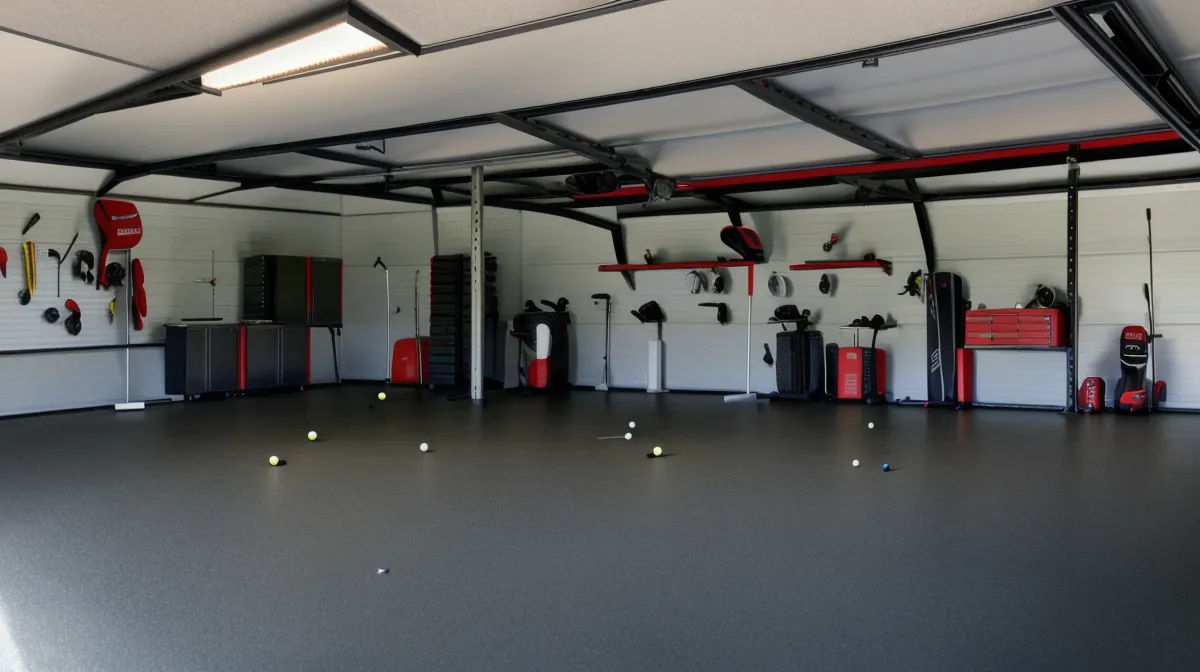
Standing in my garage late one evening last March, I realized I was more afraid of my lead leg than any water hazard on the screen. The 2023 surgery had turned my left knee into a collection of clicks and hesitations, and my old routine of grinding out 36 holes a weekend felt like a memory from a different life. I was staring at my SkyTrak Golf unit, wondering if I’d ever trust my weight transfer again.
Quick heads-up: when you click a link here and grab some gear, I earn a commission at no extra cost to you. I’ve personally put every piece of this equipment through the ringer in my Cincinnati garage, which is why I’m honest about what stayed and what got sent back. I’m just an IT guy with a 14 handicap and a very tolerant wife who has banned new simulator purchases until December 2026 (and she’s counting the days).
The Garage Sanctuary vs. The Surgery Reality
By late March, the novelty of my spring 2024 build had worn off, replaced by the clinical reality of post-op golf. I had spent close to $5,000 turning half of our two-car garage into a sanctuary, clearing out the space where the Honda CR-V used to live. The setup was solid: a projector, a hitting net, and an impact screen that acts like a home theater screen that gets hit by a 70 mph projectile. But having the gear didn’t mean I had the game. My ACL reconstruction recovery meant I couldn't just fire off driver swings like I used to.
I started noticing that playing full rounds at virtual Pebble Beach—which clocks in at a daunting 6,816 yards—was actually hurting my progress. I’d get tired by the 11th hole, my lead-leg internal rotation would get lazy, and I’d start over-compensating with my back. It was like trying to run a server stress test on a machine with a failing cooling fan. I needed a way to practice that didn't involve the fatigue of a four-hour round, even a virtual one.
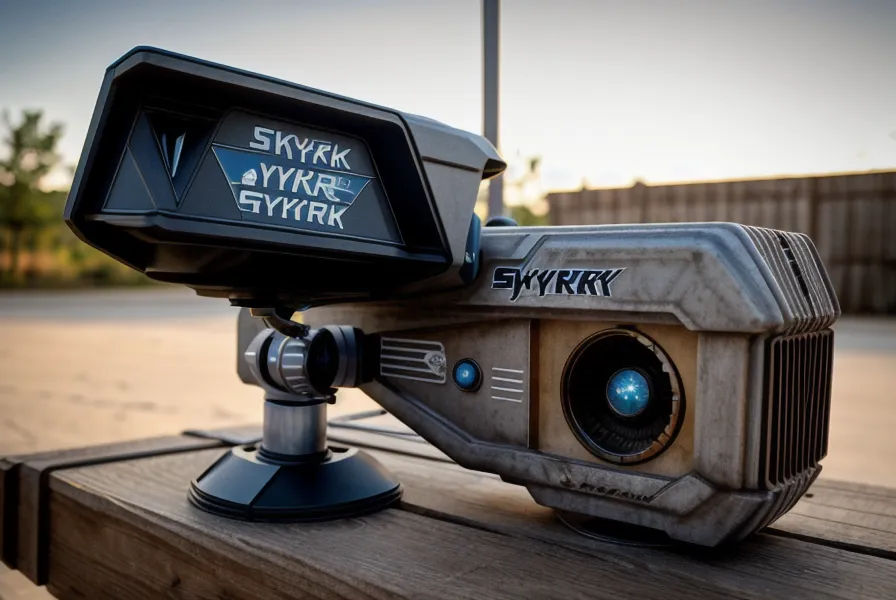
That’s when I stopped clicking 'Play Course' and started clicking 'Skills Assessment.' If you’ve read my experience with SkyTrak and knee recovery, you know I’m big on data, but this was a different animal. It wasn't about the hero shot; it was about the cold, hard dispersion numbers.
The Skills Assessment: Data for the Damaged
The SkyTrak Skills Assessment is essentially a diagnostic tool. Think of it like the camera setup in a YouTube studio—it’s there to capture exactly what’s happening without the fluff. You set up a range of targets—usually between 20 to 250 yards—and the software tracks your proximity to the pin over a series of shots. For a guy like me, trying to figure out if my 14 Handicap was still reachable, this was the ultimate reality check.
The unit uses a combination of photometric cameras and dual Doppler radar (the newer ST MAX tech) to see exactly how the ball is spinning. In my tight garage, where ceiling height is barely a few inches above my driver arc (like a nervous garage door clearance check), this camera-based system is a lifesaver. It doesn't need ten feet of ball flight to tell me I just pushed a 7-iron into the virtual woods.
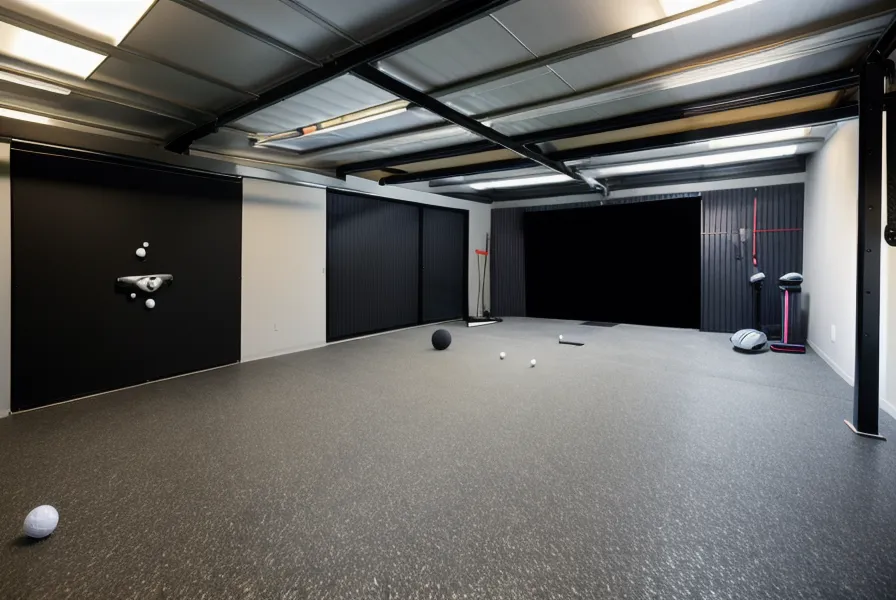
I spent most of late spring focusing on the 50 to 110-yard range. Why? Because those are the shots where I didn't have to 'fire' the knee quite as hard. I could work on stationary balance and controlled rotation. I’d hit a shot, hear the specific 'thwack' of a premium ball hitting a tight impact screen, and then listen to the low hum of the projector fan while the data processed. It was meditative, right up until the screen told me my dispersion was wide enough to fit a suburban cul-de-sac.
The July Failure and the Weight Transfer Wall
One humid evening in July, I got cocky. The knee felt great, the garage was about 85 degrees even with the fan on, and I decided to see what my driver could do. I set the Skills Assessment target to 240 yards. I took a full-speed rip, the kind I haven't really attempted since 2022, and my brain thought the knee was more stable than it actually was. I nearly toppled over toward the screen as my lead leg gave a tiny, terrifying wobble.
It was a physical reality check that no amount of YouTube simulator build tours can prepare you for. I sat on my rolling workbench for a few minutes, wondering if my wife could hear the launch monitor beeping from the kitchen and if she was counting the minutes until I gave up and came inside. That failure changed my approach. I realized that my swing path had fundamentally changed because I was subconsciously protecting that joint.
I went back to the data. The SkyTrak generates a 'Dynamic Handicap' based on your performance in the assessment. Seeing a '22' pop up when I used to be a '14' stung, but it was honest. If you are sourcing your own gear, I’ve found that Indoor Golf Shop is great for the full enclosures, but the SkyTrak software is what actually keeps you from lying to yourself about your progress.
Rebuilding with Precision, Not Power
After about six weeks of consistent use, focusing on the targets rather than the total yardage, things started to click. I stopped trying to 'hit' the ball and started trying to 'place' it. The Skills Assessment allows you to customize the number of shots per target. I’d do five shots at 60 yards, five at 90, and five at 125.
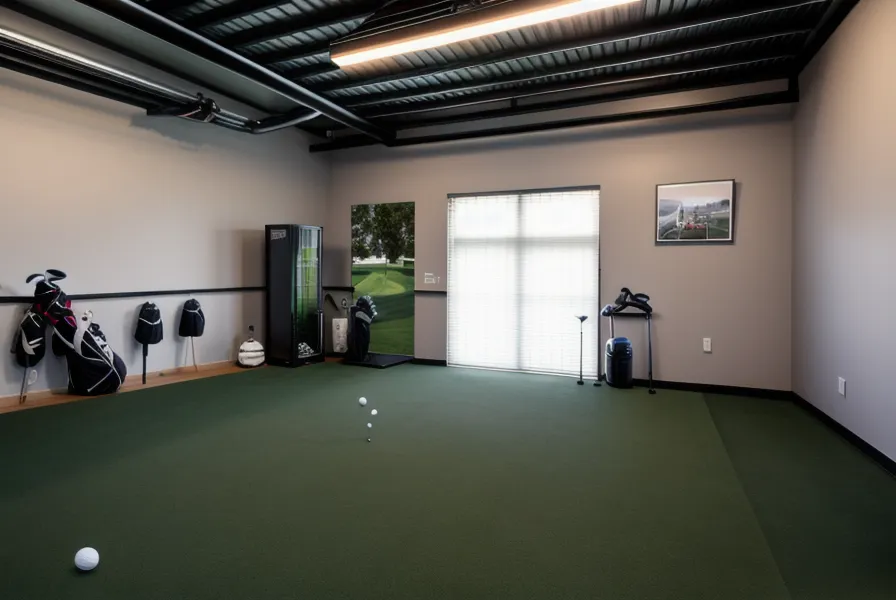
I also learned a hard lesson about mats. I had to return two of the three mats I bought because they were simply too firm. Hitting forty consecutive wedge shots on a mat that feels like concrete will give you a dull, rhythmic throb in your left patella that lasts until the next morning. I eventually found a setup that had enough give to protect the joints, which is crucial when you're doing high-rep diagnostic work. You can check my midlife simulator build guide for the specifics on what I kept.
By early September, my dispersion circles on the SkyTrak screen were finally shrinking. I wasn't back to my 2022 swing speed, but my 'Dynamic Handicap' in the app had dropped back down to a 15. The focus on controlled internal rotation—the very thing my physical therapist kept harping on—was finally showing up in the ball flight data. The Doppler radar side of the ST MAX was catching the club path nuances that explained my post-surgery fade, allowing me to adjust my alignment rather than my effort.
The Reflection: Garage Golf as a Diagnostic Tool
Looking back at the journey from late March to now, I’ve realized that 'garage golf' isn't just a substitute for the course when you're injured; it’s a better version of the range. On a real range, I’d just whack balls into the air and assume they were 'fine.' In the garage, the Skills Assessment doesn't let me off the hook. It maps my recovery in yards and degrees.
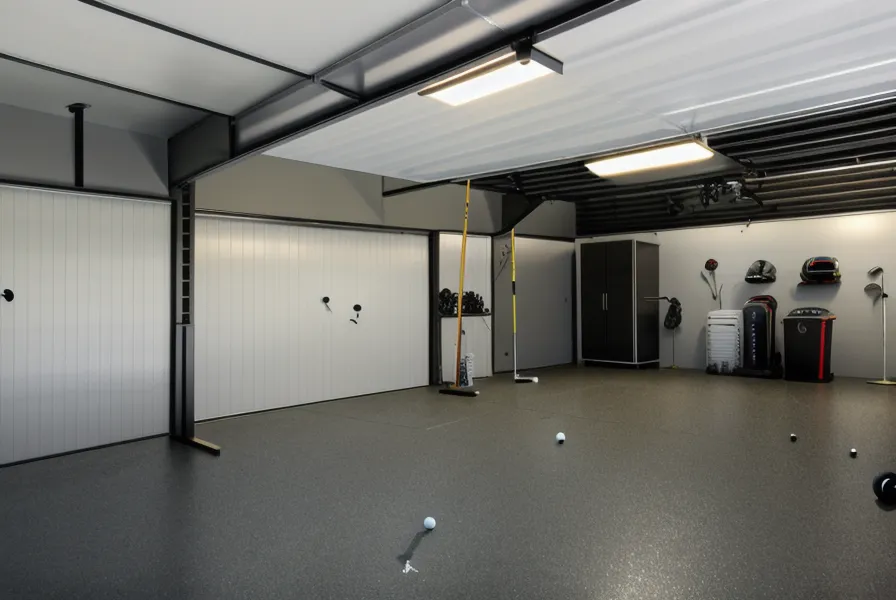
If you're coming off a surgery or just trying to fix a plateaued handicap, don't just play virtual rounds. The fatigue will mask your technical flaws. Use the assessment modules. It’s about $2,500 for the hardware, and yes, the subscription adds up, but it’s cheaper than another round of physical therapy because you pushed a 'hero shot' too far on a Saturday morning. I’m still a 14 handicap on the actual course (when I can get out there once a month), but in my garage, I’m a guy who finally knows exactly where his misses are coming from.
If you're looking to start your own build, I'd suggest checking out the bundles at Indoor Golf Shop to save yourself the headache of measuring every joist yourself. Just make sure you leave room for the rolling workbench—you’ll need somewhere to sit when the knee starts barking. And if you need a place to pick up some extra balls or a backup wedge to beat against the mat, Golf Direct Now usually has the best prices for the stuff you know you’re going to wear out.
For more on how I sourced this whole mess, take a look at my guide on mixing specialist bundles with generalist gear. Now, if you'll excuse me, I have a Tuesday night session at Pebble to get to—well, at least the first nine holes before the knee tells me it's time for an ice pack.