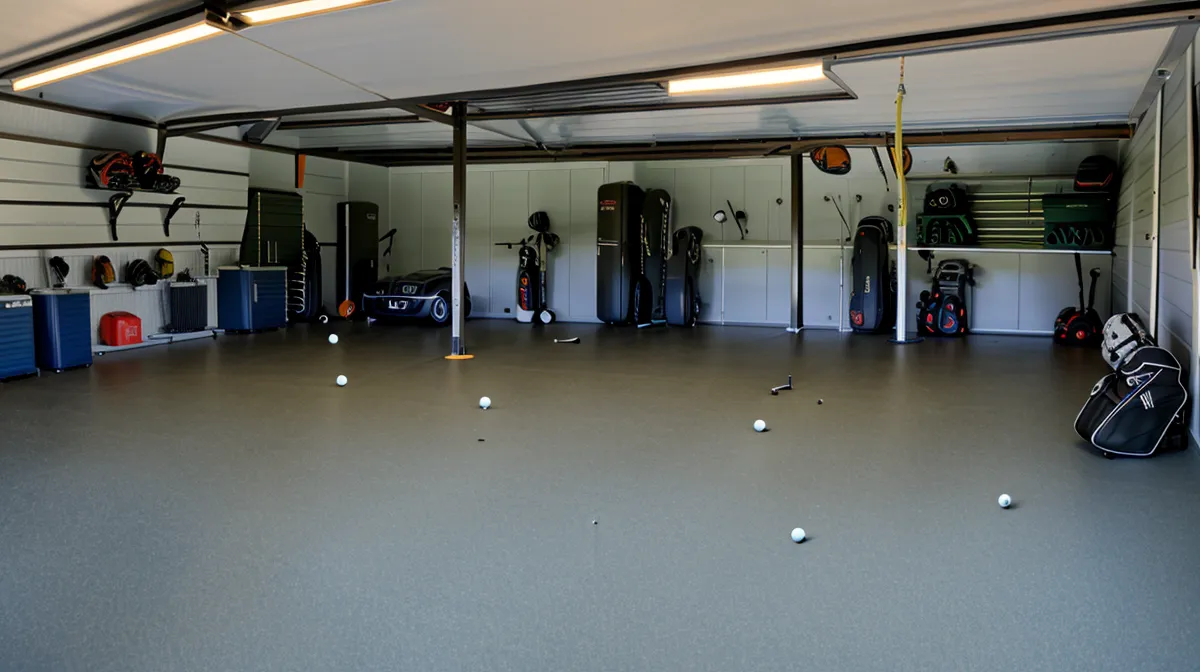
I was standing in my garage on one humid Saturday afternoon in late August, staring at that little red laser dot on the mat like it was a failing server rack. The faint smell of hot rubber from the hitting mat and the steady hum of the projector fan filled the air while the suburban Cincinnati rain hit the garage door with that rhythmic, heavy thud we get in late summer. I had just tried to hit my tenth 40-yard pitch in a row, and for the sixth time, the SkyTrak just sat there, mocking me with its silence. No data, no flight, just the ball sitting against the impact screen like a dead pixel. It is enough to make a grown man want to sell the whole rig and go back to watching cable TV.
By the time I finished that session, I felt a sharp, familiar twinge in my post-surgery knee after retrieving a ball that the simulator failed to register for the tenth time. It was the same knee that ended my 36-hole weekends back in 2023, and honestly, the physical pain was almost better than the mental drain of a $2,000 launch monitor acting like a moody teenager. I’ve spent close to $5,000 on this garage sanctuary since spring 2024, and for a few weeks this past July, I was convinced I’d bought a very expensive paperweight.
The Photometric Honeymoon and the Short Game Glitch
When I first set up the unit in early June, everything was crisp. I was finally playing Pebble Beach in my garage on Tuesday and Thursday nights, living the dream I’d spent all of 2023 researching on YouTube at 2 AM. For a 14-handicap like me, seeing a 7-iron carry 155 yards on the screen feels like a small miracle. Most photometric launch monitors use high-speed cameras to take a series of rapid-fire pictures of the ball's dimples. It then calculates spin, launch angle, and ball speed based on those frames. It’s basically a high-speed studio setup for a standard golf ball diameter of 1.68 inches.

But as the humidity climbed in mid-July, my short game practice became a disaster. Every third wedge shot—especially those delicate little chips where you’re trying to refine your feel—resulted in a "no-read." I cleaned the lens with the microfiber cloth (twice). I moved the overhead lights. I even tried using brand new balls to make sure the dimples were clean for the photometric capture window. Nothing worked. It felt like the more I tried to fix my 14-handicap short game, the more the tech resisted me. (My wife, who has already banned new SIM purchases until December 2026, started asking why I was spending two hours a night just walking back and forth to a screen without actually hitting anything.)
The Troubleshooting Rabbit Hole
I went through the usual IT manager checklist. I checked the Wi-Fi signal (solid), I updated the firmware, and I even swapped out my hitting mat for the third time this year. I realized that my hitting mat had shifted about three inches away from the monitor’s sweet spot over a week of heavy use. In a garage, things move. Vibration from a 100-mph driver swing through a mat is like a mini-earthquake for a precision camera. I thought I had it figured out, but even after re-aligning everything, the wedge shots were still a coin flip.
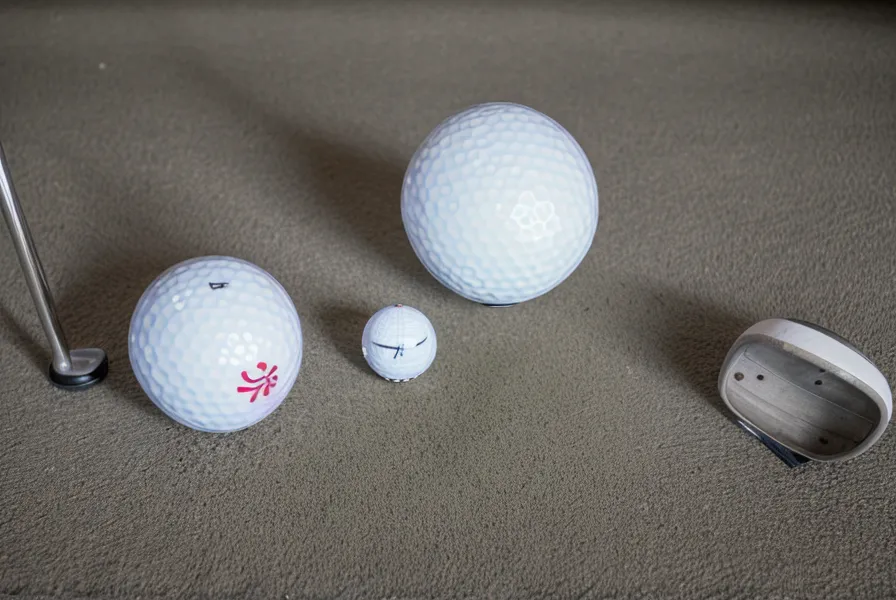
I’d previously written about DIY fixes for SkyTrak misreads and side-spin issues, but this was different. This wasn't a slice being misread as a hook; this was a total failure to launch. I was about to call support when I noticed something while kneeling on the floor to adjust the unit’s leveling feet for the hundredth time. My bubble level wasn’t just off; it was screaming at me. I looked at the floor, then at the mat, then at the SkyTrak. That’s when the suburban reality hit me: the floor was the enemy.
The 1/8-Inch Revelation: Garage Drainage and Geometry
Here is the thing about residential garages: they are never, ever flat. According to typical building standards, a standard garage floor drainage slope is roughly 0.125 inches per foot. This is engineered by design to make sure that if you pull a snowy SUV into the garage in January, the melting slush runs toward the driveway instead of pooling against your kitchen wall. For a car, a 1/8-inch-per-foot pitch is nothing. For a launch monitor that relies on high-speed cameras to track a 1.68-inch ball, it’s a geometry nightmare.
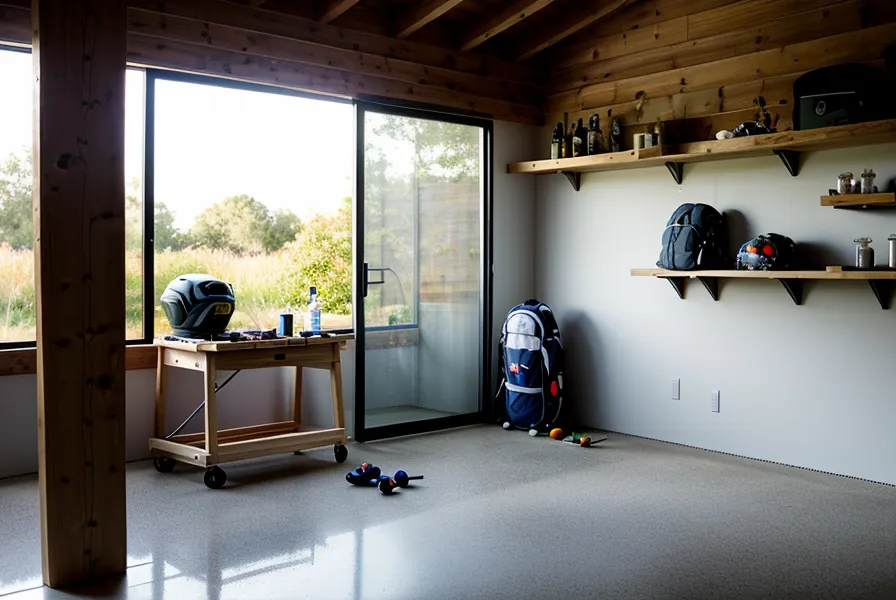
Because of that slope, my hitting mat and the SkyTrak unit were sitting on two different planes. When I set the unit next to the mat, the unit was tilted slightly "downhill" relative to where the ball was sitting. On a full 7-iron, the launch is high enough that the cameras can still see the ball leave the frame. But on a low, checked-up wedge or a 40-yard pitch, the ball was essentially disappearing from the camera's field of view before the software could lock on. The ball was effectively "above" the camera's eyes because of that 0.125-inch pitch over the distance between the unit and the ball.
I realized then that prioritizing high-end launch monitors for home simulators is often a mistake for guys like us. We spend all this time worrying about whether a unit can track pro-grade spin axis data to the third decimal point, but we don't have the swing consistency to actually use that data. Most recreational golfers would be better off spending fifty bucks on leveling their floor than five thousand on a professional-grade unit that’s just going to get confused by a crooked garage slab. I had been chasing a tech solution for a concrete problem.
The Plywood Shim and the Satisfaction of a Level Lie
The fix was embarrassingly simple. I didn't need a new monitor or a software patch. I went to the scrap pile in the corner of the garage, grabbed a piece of 1/2-inch plywood, and cut a small base for the SkyTrak to sit on. I used a bubble level to shim that base until it was perfectly flush with the plane of my hitting mat, not the plane of the garage floor. It’s the same principle as choosing the best golf simulator flooring options for garage concrete slabs—you have to account for the environment before you trust the electronics.
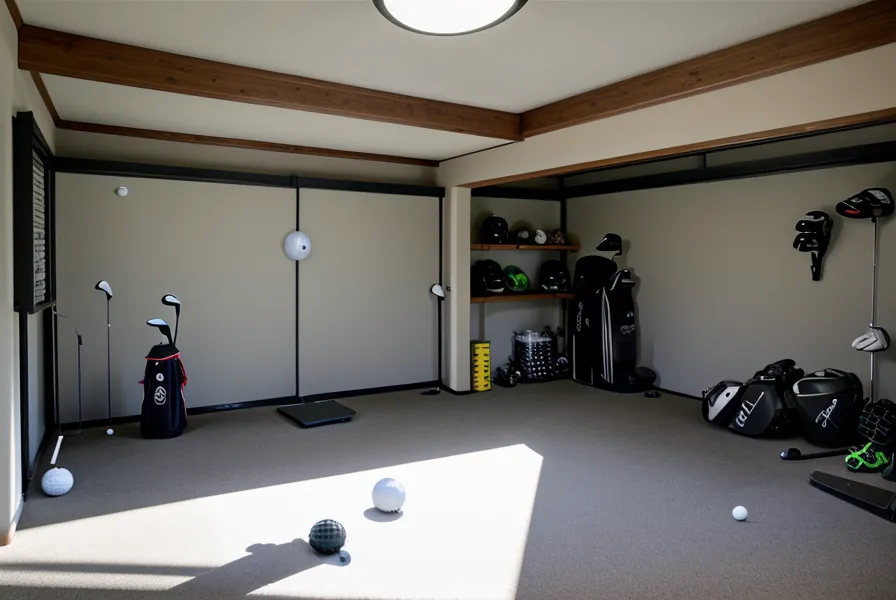
Once the unit was leveled to the mat—not the floor—the no-reads vanished. I spent the end of August hitting those 40-yard pitches until my knee started to bark again, and the SkyTrak caught every single one of them. Seeing the ball land on the virtual green at Pebble Beach without a glitch was more satisfying than any hardware upgrade I’ve made so far. It reminded me of how I finally dialed in my alignment after months of frustration; usually, the problem isn't the expensive box, it's the guy who set it up in a room designed for a minivan.
If you’re getting no-reads on your wedges, stop cleaning the lens for a second. Grab a level and check the pitch of your slab. You might find that your $2,000 piece of tech is just trying to look uphill at a ball that’s already gone. A simple plywood shim won’t fix your handicap, but it’ll keep you from wanting to throw your 60-degree wedge through your impact screen on a Tuesday night. My Cincinnati garage isn't a PGA tour bay, but with a bit of scrap wood and some basic geometry, it's close enough for me.