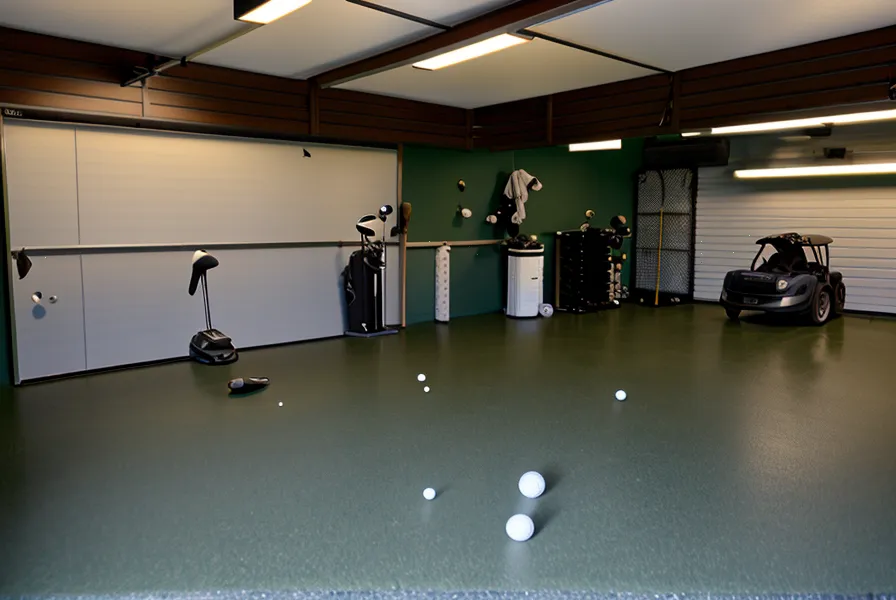
The ball starts dead straight, holds its line, and drops pin high. Same club, same stance, same feel through impact — then the very next swing peels thirty yards right, like I'd never set foot on a golf course in my life. Nothing about my swing changed between those two shots. What changed sits at the center of getting SkyTrak alignment right in any garage golf setup: the ground under your feet is almost never as level as it looks, and a real DIY simulator fix for indoor swing accuracy usually starts on the floor, not in a settings menu.
My launch monitor is a photometric unit, a bank of cameras that reads the golf ball's photometric signature in the fraction of a second after contact to work out spin and launch angle. Move that camera two inches off its intended spot, or angle it a few degrees away from the target line, and the software is not wrong exactly, it is just measuring a different shot than the one you actually hit. That is the entire answer to a draw that disappears on screen: not swing inconsistency, not bad luck, just geometry.
Launch Monitor Position and Ball Flight Inconsistency
Every unit on the market, mine included, only ever measures a proxy for what your club actually did, not the swing itself. How accurately different launch monitors capture true ball flight data is a rabbit hole on its own, one other builders on this site have gone deep on, but the short version for alignment purposes is simple: the camera has to agree with your stance, your target line, and the ball's actual position, or the numbers it produces are describing a shot in a different room. Once that clicked, the mystery slice stopped being mysterious and started being a checklist to work through.
The Floor Is Rarely As Level As It Looks
Garage floors are poured with a drainage slope on purpose, so water runs toward the door instead of pooling against the drywall, and most guys never notice because a car does not care about a half-inch grade. A launch monitor cares. My concrete floor runs about nineteen feet from where I set the ball to the screen at the back wall, and the slope was too subtle to catch by eye. I found it with a laser level set across my stance width, watching the beam sag toward the corner marked by a faint oil stain on the slab — half an inch of drop, no more.
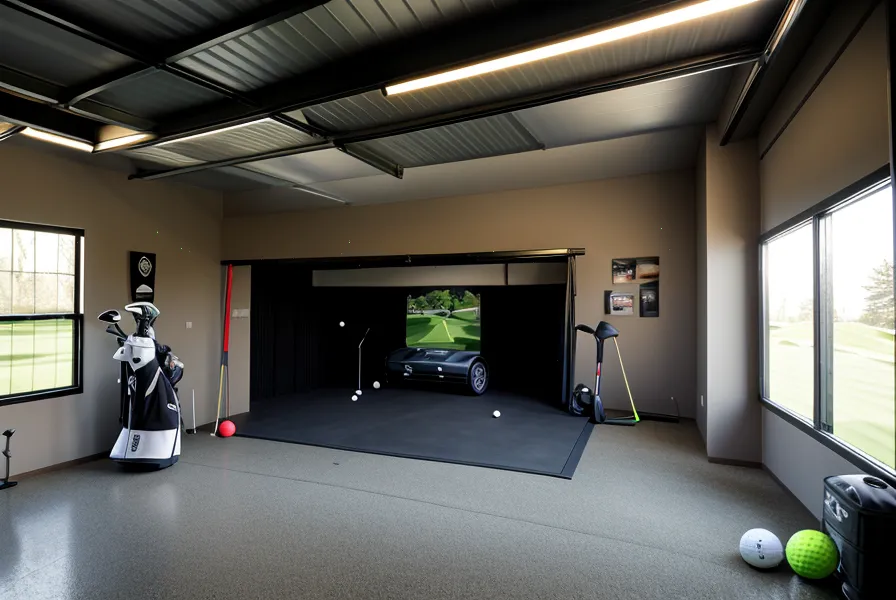
That half inch does not sound like much until you remember the launch monitor is triangulating spin axis off the ball's position relative to its own lens, and a tilt that size across your stance is enough to shift the read into curve that was never actually there — exactly the ghost slice I had been chasing with new mats instead of a level. I ended up writing the flooring side of this fix into a separate piece on the best golf simulator flooring options for garage concrete slabs, because it deserved its own space. Once the stance area was actually level, the same swing started reading as the same swing, every time.
What I Tried First
Before the floor crossed my mind, I went after the impact screen instead. My theory was that a stiffer impact meant a cleaner ball read, so I clipped a foam insert behind the screen to cushion the strike and calm down whatever was confusing the sensor. Three buckets of balls later, the seam split clean through and the miss pattern had not moved at all, which meant the only thing that project fixed was my patience for hardware-store solutions. Conrad, a buddy from my old team who has kept his own basement rig running longer than mine and never spends a dollar he does not have to, told me as much before I had even ordered the panel, and made sure I heard about it afterward too. Screens like mine are not built to shrug off a full bucket session no matter how you pad them, and that was an expensive way to confirm it.
Placing the Sensor So It Isn't Guessing
Floor level solved the biggest chunk of it, but the monitor still needed to sit exactly where the manual says it should relative to the ball, not just somewhere flat. Two inches too far back, or three degrees off the target line, and the unit starts filling in gaps with guesses, and it always seems to guess you are worse than you are. This is a different problem than calibration drifting over time with heavy use, which is its own maintenance routine entirely. This was pure placement, the box sitting in the wrong spot relative to a ball that had not moved at all.
A Mid-Range Monitor Aligned Right Beats a Premium One Set Up Wrong
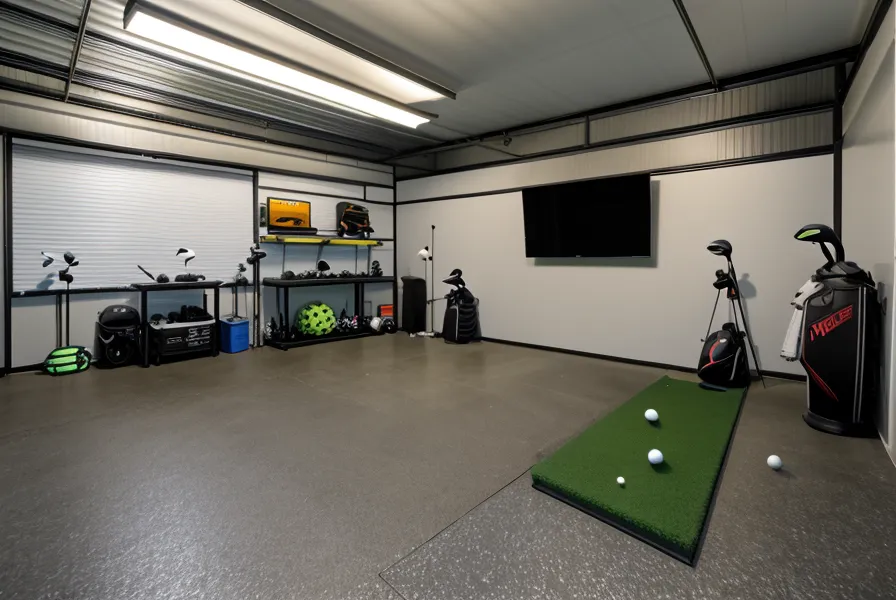
Chasing the top-end professional units is, for most guys building this in a two-car garage, a waste of money. Those systems built for indoor golf retail centers and instructor studios run north of fifteen thousand dollars and need room depth and lighting control a suburban garage will never have. A mid-range unit, aligned properly, beats a premium one bolted in crooked every time, especially once you accept that the space between your mat and the screen is functioning like a home theater screen taking a direct hit from a seventy-mile-an-hour projectile a few hundred times a week. The mat under your feet is doing a job closer to a yoga mat than most golfers realize, cushioning the joint and feeding back grip, and none of that has anything to do with what the camera sees. I stopped chasing a better monitor and started making sure my roughly five-hundred-dollar hitting strip sat flush with the sensor height, which mattered more than any spec sheet.
The Fix That Worked
Once the floor and the sensor position were both sorted, the fix itself took an afternoon. A scrap piece of plywood and a handful of shims built a level stage for the monitor, set exactly parallel to the target line instead of just level with the concrete under it. The next swing off that stage read the way the swing actually looked: ball started right of target, curled back toward center, landed pin high instead of thirty yards off in the water. (My wife wandered in expecting the usual eye-roll material and instead found me hunched over a ball-speed log, actually cross-referencing columns like it was a work report — she did not say a word, just gave me a look and went back to the kitchen.)
None of this required new gear, which stung a little after three different mats and a screen panel that did not survive a single session. If your numbers look erratic despite a swing that feels repeatable, check the floor before you check the settings menu, then check the distance and angle from the ball to the sensor, in that order, before you spend another dollar. Readers still in the buying-and-returning phase of a build might recognize themselves in my first month with a garage golf simulator, where most of the early gear mistakes live. The whole setup sits close to five thousand dollars in now, and the alignment fix that mattered most cost nothing but a scrap of plywood and an afternoon.