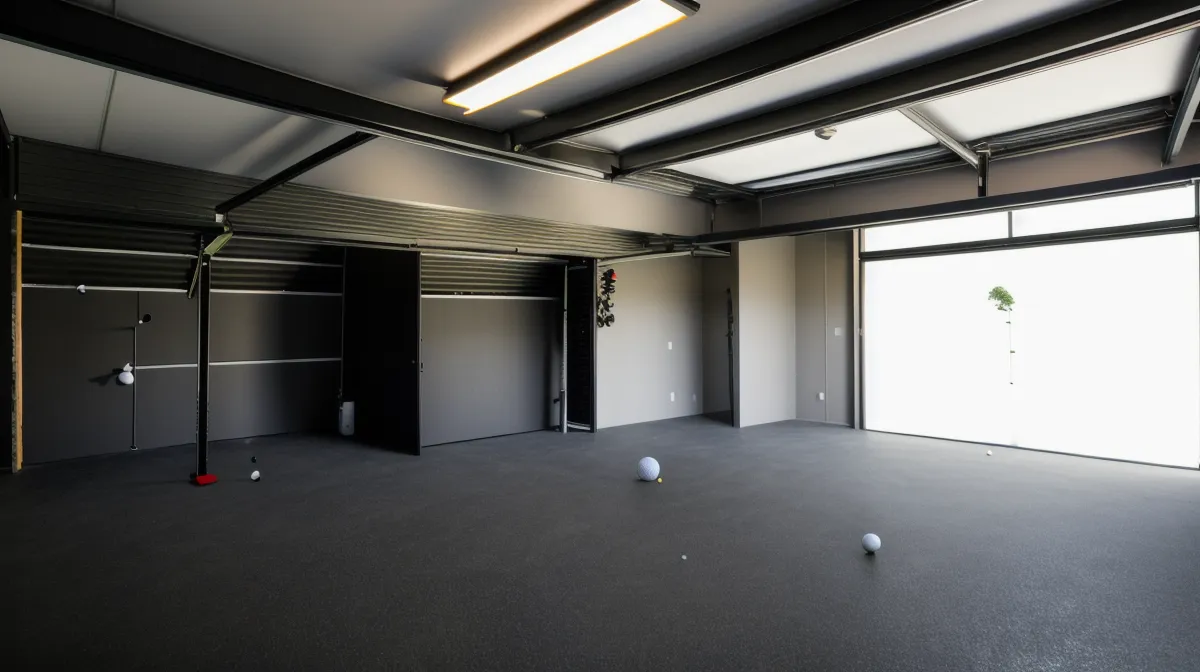
What actually changes when a launch monitor spits out three different numbers for the exact same swing? Most people putting together a garage golf simulator jump straight to blaming the hardware — the sensor drifted, the unit's defective, time to ship it back. A month into this simulator build, with a SkyTrak anchoring what's become a fairly serious home sports tech habit in a suburban Cincinnati garage, I've landed on a different theory, and it has nothing to do with the box the monitor came in.
Quick disclosure since this whole piece leans on gear I've actually bought: some of the links below are affiliate links, and if you buy through one I earn a small commission at no extra cost to you. Everything mentioned here got tested, argued with, and in a couple of cases boxed back up for a return label, inside my own garage rather than a marketing deck.
The Myth: Your SkyTrak Isn't the Problem
Here's the misconception worth killing early: when the numbers look wrong, most garage builders check the launch monitor first and stop there. They should check it last. I returned a Garmin Approach R10 after two weeks because the shot data felt inconsistent in my low-light garage, and at the time I was certain the unit itself was to blame. No real troubleshooting involved. Just an assumption that felt obvious with a stack of return boxes already forming in the corner.
That kind of jump-to-conclusions logic skips over the actual chain of variables sitting between your swing and the number on the screen. The mat under your feet, the light hitting the sensor, even the slab underneath the mat all shape what gets reported before the electronics get a fair trial. Some nights I'm still playing a full round at Pebble Beach without leaving the driveway, and the readings shift more from those environmental factors than from anything resembling a defective sensor. How accurate that ball-flight data actually is deserves its own conversation, one I've already had elsewhere — the short version is that accuracy and consistency are two separate questions, and most people conflate them.
Why the Mat Changes What Your Sensor Sees
A cleaner example: swapping hitting mats midway through the build pushed my driver clubhead-speed reading from 91 to 94 across back-to-back sessions, same club, same swing, same guy standing over the ball, nothing different except what was underfoot. That's a real three-mile-an-hour shift with zero change in my actual swing, and it has more to do with how a mat interacts with a sensor, and with your joints, a topic I've covered in full elsewhere, than with any flaw in the camera itself.
I started this build with a SkyTrak Golf unit specifically because it pairs a camera with radar rather than leaning on a single sensor type, and for a guy who mostly wants to sneak in 18 holes on a Tuesday night without a tee time, that combination has earned its keep. What those core numbers actually mean is its own explainer, and I won't repeat it here.
Rule Out the Rest of the Chain First
Ceiling clearance is worth checking before anything else ships to your garage, though that's more of a measuring exercise than a mystery, and I've laid out the actual numbers in a separate piece for anyone sizing up their own space. The same goes for how a dark garage messes with projector contrast, whether a concrete slab needs leveling before a mat goes down, and whether a full enclosure beats an open bay for catching stray shots — each earns its own write-up rather than a paragraph tacked onto this one. What I can speak to from the build itself: I looked hard at bundled packages from places like Indoor Golf Shop before deciding to source everything piece by piece, a call that cost me real time chasing down parts that would've shipped together in a single box.
The PC side of the build is its own rabbit hole too. How much rendering load simulator software actually puts on a graphics card, and how a launch monitor can drift out of calibration over months of use, are both questions worth answering properly instead of squeezed into a receipts-and-returns post. Same with how the different cost buckets (monitor, mat, screen, net, PC) actually stack up across a full build; that math deserves its own accounting rather than a rough guess here. For the hardware comparison specifically, I already broke it down in From Knee Surgery to Pebble Beach: A Garage Golfer’s Real-World Launch Monitor Setup, if you want the spec-sheet version instead of the mat-blaming one.
The Shadow, the Screen, and What Actually Survived
My own shadow blocked the entire hitting area for the better part of an afternoon before I figured out the projector mount needed to move three feet to the side, not a subtle problem, just an embarrassing one to diagnose. Once that got fixed, the impact screen turned into the one piece of gear that's taken a beating without a single complaint, closer in spirit to a durable home-theater screen than anything precision-built. A decent one is layered specifically so a golf ball hitting a $500 screen at speed sounds like a dull thud instead of a gunshot in a room with a kid sleeping above it, and the layering and sound-dampening details are covered properly in The Garage Golfer’s Guide to Impact Screens for anyone shopping screens on their own.
I Kept the Monitor and the Screen, Not Much Else
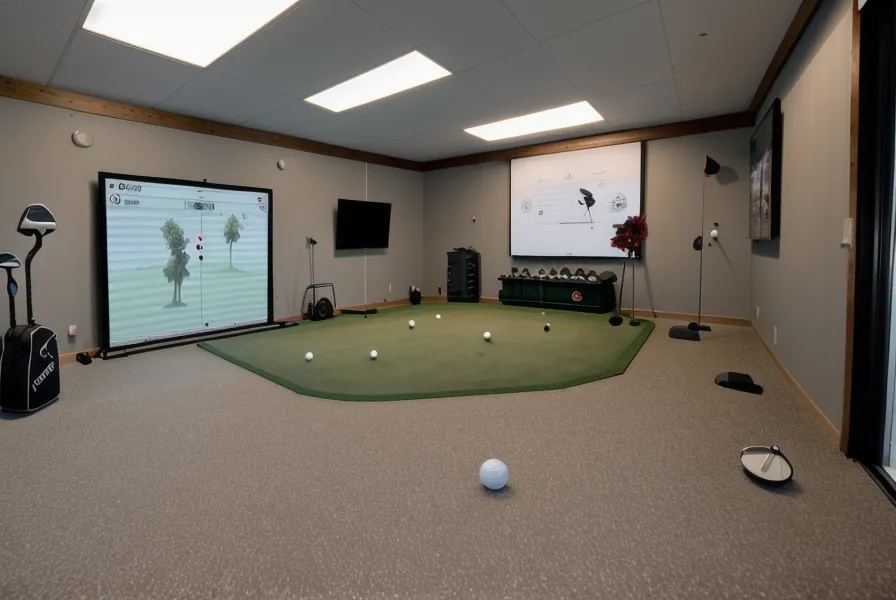
By the time the return boxes stopped piling up, three things had earned permanent space: the launch monitor, the impact screen, and, a little surprisingly, a space heater, since a cold garage does a photometric camera no favors on a January morning. Everything else turned out negotiable, including a swing-weight scale and a laser level that looked essential in a YouTube video and useless on my actual concrete.
I also spent an embarrassing number of nights trying to talk myself into a $400 SWAG Golf putter, mostly on the theory that a milled 303 stainless steel head counts as a collectible rather than an impulse buy (my wife remains unconvinced, and has said so more than once). For everyday extras, backup wedges and the like, Golf Direct Now has treated me fine, since hitting off a mat for an hour turns out to be harder on your feet than you'd expect.
Proof That Isn't a Number on a Screen
My neighbor Wes made his skepticism known for weeks, right up until the afternoon he stepped into the bay himself and put a drive into the screen. After that he stopped needling me about the whole project and started finding reasons to swing by on session nights. That reaction is better evidence the setup works than any single number on a screen.
A reader named Chadwick emailed a while back asking, point blank, which monitor I'd actually buy today if I were starting from zero. He's the type who sends a photo of the receipt a couple of weeks after every recommendation pans out, which is a better accountability system than most comment sections offer.
So How Do You Actually Trust Your Numbers?
On the days the weather cooperates, I still get out to a real course. Devou Park in Covington used to be a regular stop back when my knees allowed for a full round without complaint. These days, though, the garage is where I actually trust the numbers, for one specific reason: every variable in it is one I control.
So, the actual answer to the question this piece opened with: before you blame a launch monitor for bad data, change one variable at a time — mat, lighting, floor — and retest the identical swing. If the number moves and your swing didn't, you've found the real culprit, and it's rarely the sensor sitting right in front of you.
If you're planning to get back out on actual grass once the weather turns, I've been eyeing the Alphard Golf Cybercart for those days, decent warranty coverage on the folding mechanism, which is usually the first part to fail on a push cart. Most weeks, though, Tuesday and Thursday nights are still happening in the garage, and if you want to know whether any of this actually moved my handicap instead of just my credit card balance, that's covered in Tuesday Night Garage Rounds: How My SkyTrak Setup Actually Lowered My Handicap This Year.