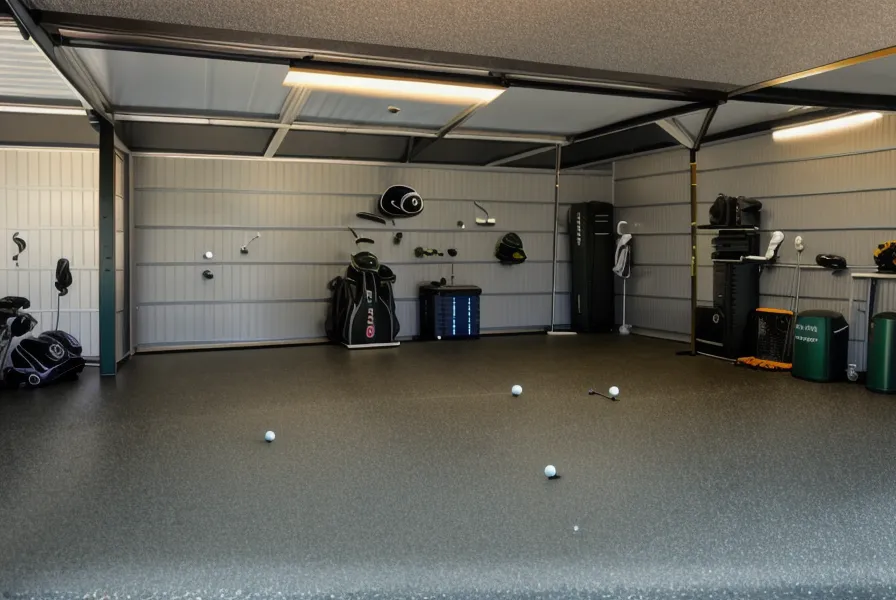
Nine feet of ceiling clearance is what separates a full driver swing from a clipped garage joist in my simulator bay, and it turns out that's also more than enough room for a hosel rocket off a 6-iron to come within less than an inch of my SkyTrak launch monitor instead of the net behind it. It missed. The scuff mark it left on the concrete, a few feet from the oil stain that was already in that corner of the garage, did not miss, and for a few seconds I just stood there doing the math on how many more swings like that stood between a working garage simulator and a $2,000 paperweight.
That near-miss is basically the whole reason this page exists. Quick disclosure since we're already here: if you click through to a launch monitor or case on this page and buy, the vendor pays me a commission, and the price you see at checkout doesn't change. I'm still the same 14-handicap IT guy who spent more than I want to admit on a SkyTrak setup for this garage simulator, and I still can't tell you with total confidence that every ball-flight number it spits out is gospel. That's an argument for a different page, not this one.
The Math Behind a $150 Case and a $2,000 Machine
Explaining a $150 case purchase to my wife is a much easier conversation than explaining a $2,000 replacement unit after a stray wedge shot (she's already put a moratorium on new sim purchases until December 2026, so a broken launch monitor right now would mean months of hitting into a silent net with zero data). The containment logic is the same one that applies to a shank net protecting drywall, except here it's aimed at a single piece of equipment sitting directly in the path of every thin shank I hit — and that equipment costs a lot more than the wall behind it. Most garage floors, mine included, have a slight slope built in for drainage, somewhere in the 1-to-2 percent range, which already makes leveling a launch monitor its own small chore before you add a case on top of it. Get the base level once, note where the feet sit, and you're not re-leveling every session.
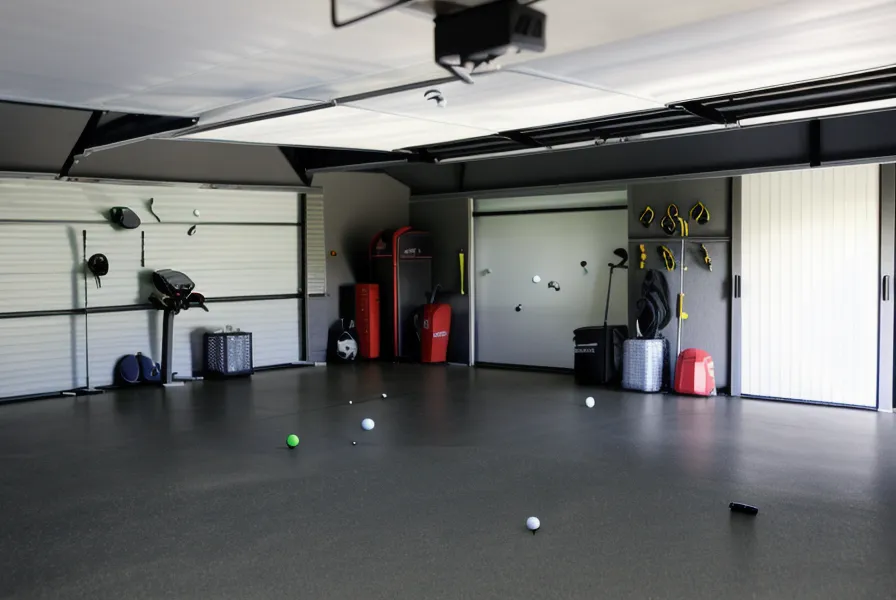
Does Launch Monitor Protection Actually Belong in a Garage Simulator Build?
A SkyTrak unit is essentially a high-end camera setup, not that different from the gear a YouTuber uses to film a garage studio. The SkyTrak Golf uses photometric tracking, which means it needs a clean, unobstructed view to read ball dimples and calculate the core numbers — ball speed, launch angle, spin — that the rest of the software depends on. Crack that lens with a 70 mph golf ball and you're not looking at a cosmetic scratch, you're looking at a brick that still owes you course-play data. A case that adds even a fraction of an inch of misalignment at the lip can throw all of that off before you ever get to the swing itself.
Weighing Metal Against Plastic Before You Buy
Cases split into two camps: full metal jacket steel boxes and high-impact plastic shells, and there's a real tradeoff between them that most product pages don't mention. Steel takes a hit better than plastic ever will, but a metal lip sitting even slightly wrong can interfere with the internal antenna or throw infrared reflections back at the cameras, which matters more than people think if you're already nervous about SkyTrak vs Garmin R10 accuracy questions. I went through that exact accuracy worry myself with a Garmin Approach R10 I bought and returned inside two weeks, because the indoor shot data in my low-light garage felt inconsistent enough that I didn't trust the numbers on the screen. A reader named Chadwick Obiero emailed me after that comparison post with the most detailed real-world R10 field report I've gotten from anybody, and it lined up close enough with my own two weeks that I stopped assuming it was just my garage. None of that argues for a bulky metal case that risks missed shots when you're just trying to grind out a session of Pebble Beach on a Tuesday night — a plastic shell with a tight, correct fit beats a steel one that fights the signal. Whether that plastic shell sits inside a full enclosure or an open bay setup is a separate decision with its own tradeoffs I won't get into here.
Where I Actually Landed on a Case
I ended up looking at bundles from the Indoor Golf Shop, which is where I probably should have started instead of shopping case options one at a time. Their team has clearly built for a real garage instead of a photo studio — dust, temperature swings, and the occasional shanked 7-iron are just part of the environment, not an edge case. My bay runs about nineteen feet from ball position back to the wall, which is more than most two-car garages give you, and even with that much room a case with the wrong camera-window angle will still clip the first few inches of ball flight the cameras need. The one shop light clamped above my hitting bay throws enough glare on certain surfaces that I've had to think harder about ambient light and projector contrast than I expected going in, which is a whole separate rabbit hole from case shopping. Impact screen durability is another one of those adjacent problems — a case protects the monitor, not the screen it's projecting onto, and those wear out on their own schedule.
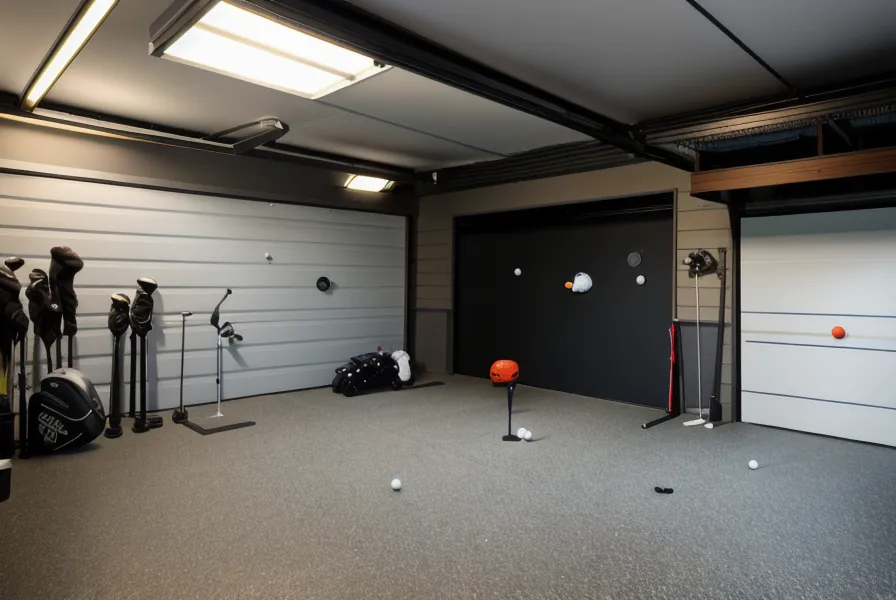
What About Putting?
Putting is the part everyone forgets when they're worried about protecting a launch monitor. I putt with a SWAG Golf putter milled from 303 stainless steel — the same construction Anna Nordqvist used to win the 2021 AIG Women's Open, for whatever that's worth to a guy putting on a foam mat in Cincinnati — and even on a foam mat I want the SkyTrak reading the roll accurately, which means a case with a high front lip is a real problem: it blocks the camera's view of anything hit too close for a short putt. Mat surface and how it transmits feedback to your joints is a whole different conversation than protective cases, but the two aren't unrelated once you're testing a case on the same mat you putt on every session, and my 7-iron carry impressions haven't shifted at all whether the case is on the tripod or off it, which is exactly what you want from a $150 accessory. My right knee, the one that got rebuilt in 2023, was still catching on longer sessions right up until a Wednesday morning about six weeks in when I stood over a full swing and realized nothing pulled or ached — nothing to do with the case itself, but it's exactly why I started caring more about protecting the equipment I'd be leaning on for the next year of recovery instead of the real course. Around the same time I looked at an Alphard Golf Cybercart for actual course days, mostly for a frame warranty that runs two years against the folding-mechanism failures that kill cheaper carts by year three, though the battery's own 500-cycle warranty mark is apparently optimistic if you believe the reviews complaining about early degradation. A good protective case is a lot like a hard camera case for a decent DSLR body: overkill for a phone camera, completely reasonable for something that cost real money and sits exposed to whatever you swing at it.
Get the Case Before the Hosel Rocket, Not After
Eight weeks after I finally leveled a case onto the tripod and stopped thinking about it, nothing has shifted — no re-leveling, no lost signal, no midnight panic about a stray shank. That's the actual lesson here: the case earns its $150 not by being exciting, but by making the whole safety question boring, which is exactly what you want from a $2,000 piece of gear you're relying on twice a week. My neighbor Wes texted me a photo last month of a two-generations-old launch monitor he'd spotted at Costco, unprotected, sitting in its box on a shelf, which is basically the exact unit this whole page is trying to keep you from cracking. If you've already got the nine feet of ceiling clearance for a full driver swing, you have enough room for a proper case too, so there's no real excuse to keep gambling on a clean swing every single session. For general gear beyond just the case, Golf Direct Now is worth a look, and if you want to go straight to the source, the official protection options through SkyTrak Golf are the simplest way to stop worrying about it and get back to the actual golf.