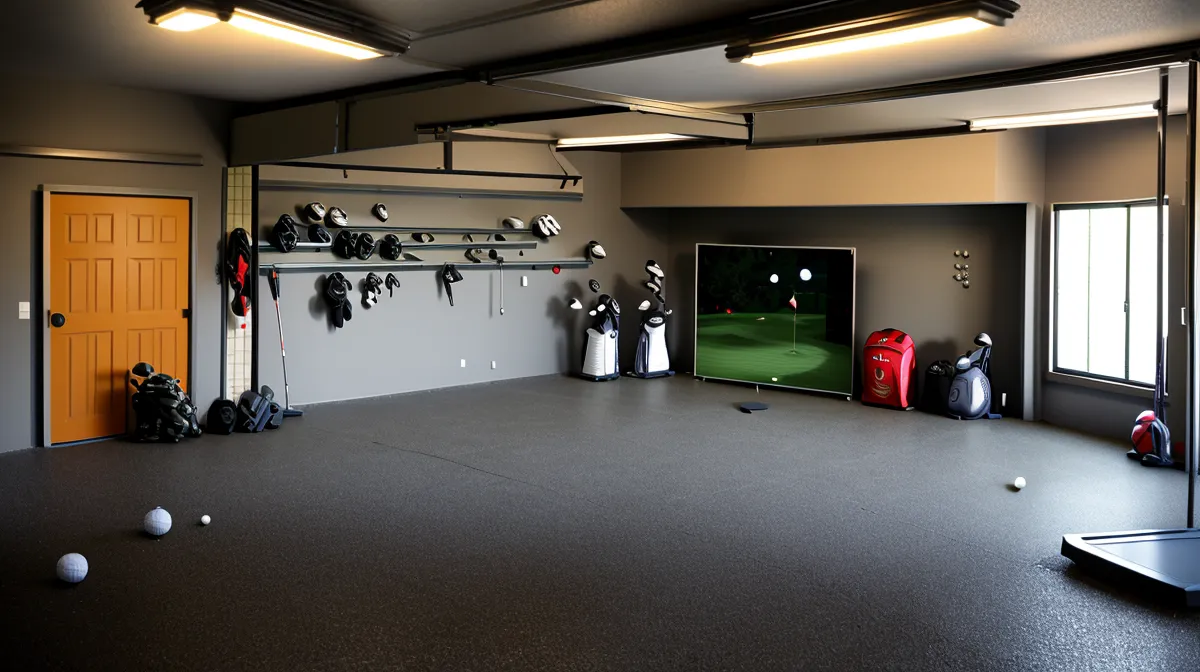
Half an inch of foam separates a clean golf swing from a trip back to physical therapy. That's the real lesson behind building a garage golf setup around a SkyTrak launch monitor: the hitting mat, not the launch monitor, decides whether your joints survive a full winter of Tuesday and Thursday sessions. Every hitting mat looks identical in a product photo. None of them behave the same once a knee with a surgical scar is absorbing impact a hundred times a night, and joint health turns out to be the spec nobody bothers to publish.
Quick disclosure before anything else: clicking through and buying something here earns me a small commission at no extra cost to you. My wife banned new simulator purchases until December 2026 (she put an actual calendar alert on it), so everything below is filtered through roughly five thousand dollars already sunk into getting this right.
The Hitting Mat Is Doing More Than You Think
When I finally put together the SkyTrak Golf setup, ceiling clearance and joist height ate all my attention, not the floor underneath. A garage floor is just poured concrete, dense and completely unforgiving, and hitting off a cheap half-inch mat on top of it is functionally the same as hitting a ball straight off a sidewalk.
Forty-eight years old with a knee that's already been opened up once tends to notice that kind of thing fast. A neighbor a few doors down spends every weekend coaching his daughter's travel soccer team, chasing tournaments across three counties. I get my golf fix on a Tuesday and Thursday night instead, in the garage, which is exactly why the floor matters more than anything else in this build.
Before any of it moved into the garage, there was a pop-up hitting cage set up in the backyard, the collapsible kind that folds out of a duffel bag. It survived exactly one Ohio winter before the frame buckled under the weight of ice and snow. One winter. After that it was the garage or nothing.
By week four of running on a mat built with real foam density instead of a thin rubber topper, something changed that I hadn't expected: one Wednesday morning, I realized I hadn't iced the knee once in days. First time that had happened since the surgery.
Why Does Foam Density Beat Brand Name for Joint Health?
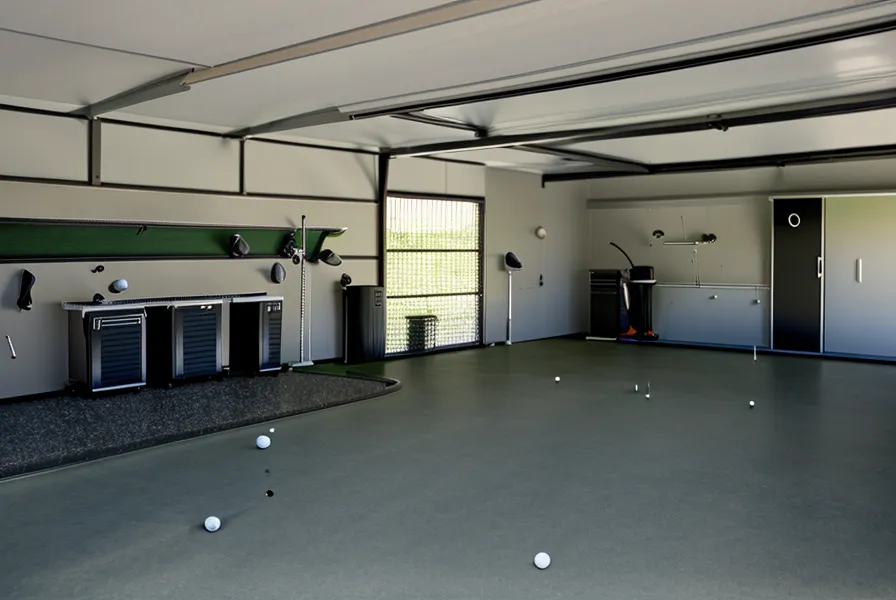
I eventually landed on the SIGPRO line carried by the Indoor Golf Shop; they run full simulator bundles, but the standalone mats turned out to be the real find for anyone over thirty whose joints complain. The tradeoff nobody markets on the box is density. A denser foam base absorbs more of the downward strike, even though it feels a touch softer underfoot than a tour pro would tolerate on a range mat at a real course.
That softness is the entire point. Hitting off it feels closer to landing on a thick gym mat than a driveway, somewhere between a yoga mat and a memory-foam bath mat, if you need a non-golf comparison, and that's the trade a knee with hardware in it actually wants. The elbow pain that used to show up after every session is gone now, even with a driver swing that still clocks in around 95 to 100 miles an hour on a good night.
A thicker mat also adds an inch or two to your standing height, which is worth knowing before you double-check your Real Garage Golf Simulator Space Requirements for a Full Swing. The ceiling math changes the moment you stack mat thickness on top of your own height, and that's an easy way to clip drywall on a full backswing you didn't think was a problem.
None of that registered the night I first tested it in January, standing in thin-soled trainers and feeling the cold come straight up off the slab into the balls of my feet before I'd even taken a practice swing. Not exactly the comfort of a heated range.
Launch Monitor Calibration and a Shifting Mat
The tech side of this matters just as much as the joints do. My launch monitor runs on photometric cameras that expect a level, motionless hitting surface; clubhead speed, spin rate, launch angle, all the core numbers get shaky the second the mat shifts half an inch mid-session. A corner of mine crept off level once and turned my putter face angle readings into complete noise. How trustworthy those ball-flight numbers are once everything's level and locked down is a whole separate question, one I've gone deep on elsewhere; this article is strictly about the floor underneath it.
Getting that level in the first place is its own project. How flat a poured slab actually stays over time is a bigger question than most people budget time for, and it's not one this article is trying to answer. What I can say is that a cheap mat develops a groove where you hit most often, call it a trench, and that groove throws off the camera's read on your strike, making a 14-handicap swing look worse on the screen than it does in real life. Weight solves the sliding problem better than any adhesive strip or rubber backing did for me; a proper foam base is heavy enough that I'm not repositioning it every five swings the way I was with a lighter mat early on.
Anyone who'd rather not source a mat, a monitor stand, and an impact screen as three separate purchases can look at what the Indoor Golf Shop sells directly: Top Golf Simulator Enclosure Kits for DIY Garage Projects that bundle the whole floor system from the start. Whether a full enclosure beats an open-bay setup like mine really comes down to how much garage space you're willing to give up permanently, and how long the impact screen inside that enclosure holds up under real swings is its own separate question worth researching before you commit.
Rounding Out the Garage Golf Budget
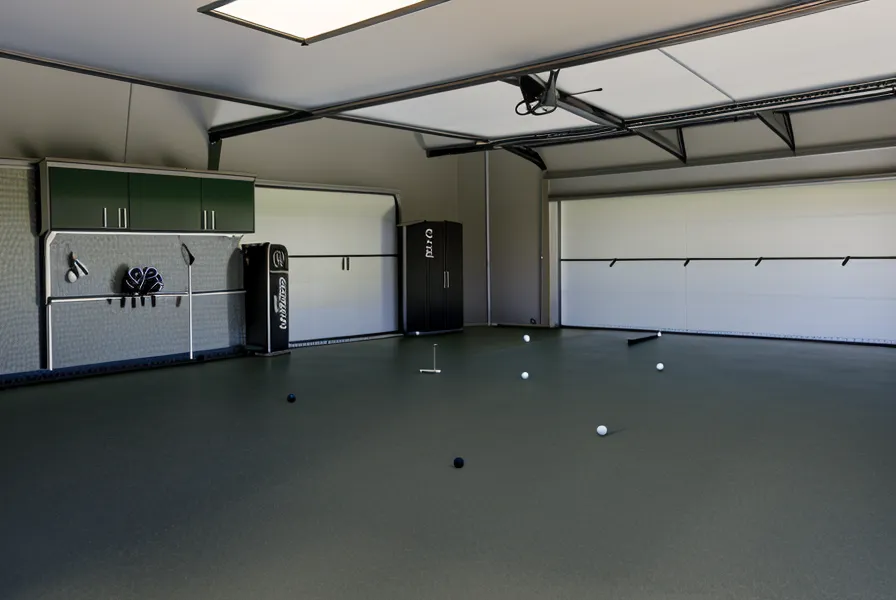
The mat and the launch monitor ate most of the money, but the rest of the garage still needed filling in. A few accessories came from Golf Direct Now, mostly a backup practice mat, since their simulator-specific inventory isn't as deep as the specialty shops, though their price matching saved a little on a wedge I'd ground down hitting off bare garage floor for months before the mat arrived.
A hitting net went in early too, mainly to catch mishits before they found the garage door. How well a net actually contains a shanked iron compared to a full impact screen is a longer comparison than fits here. Projector visibility under a single shop light is a separate fight I haven't fully won either, and I'm not pretending otherwise.
For actual rounds outside, the handful of times a month the knee allows a trip to Sharon Woods Golf Course in Sharonville, I finally bought an Alphard Golf Cybercart. It picked up a 2025 award for best overall electric push cart, rare for a brand outside the big three, and it folds down small enough to live in the corner next to the SkyTrak Golf setup without stealing swing room. There's also a SWAG Golf putter on the rack now, a bit of a vanity buy the budget committee side-eyed hard, but the face milling gives a noticeably truer roll on the simulator turf than the mallet putter it replaced.
What I'd Buy First, Knowing What I Know Now
Building this out has been a series of expensive lessons, and the biggest one is simple: don't skimp on the hitting surface. Owning the sharpest projector on the market and the Best Golf Simulator Software for SkyTrak Users This Year means nothing if your knee won't let you stand there for twenty minutes. The mat is the reason weeknight sessions still happen instead of just watching other guys do it on YouTube at two in the morning.
Starting from zero, the mat and the launch monitor come first, full stop. The electric cart, the fancier putter, the enclosure kit that turns a garage bay into something closer to a screening room; all of that can wait for the budget committee's approval. Measure ceiling clearance twice before buying anything built around a full backswing; that part I got right more by luck than planning. For a longer rundown of what earned its keep in this garage and what got boxed back up, there's more in Golf Sim Accessories for a Better Garage Practice Experience.