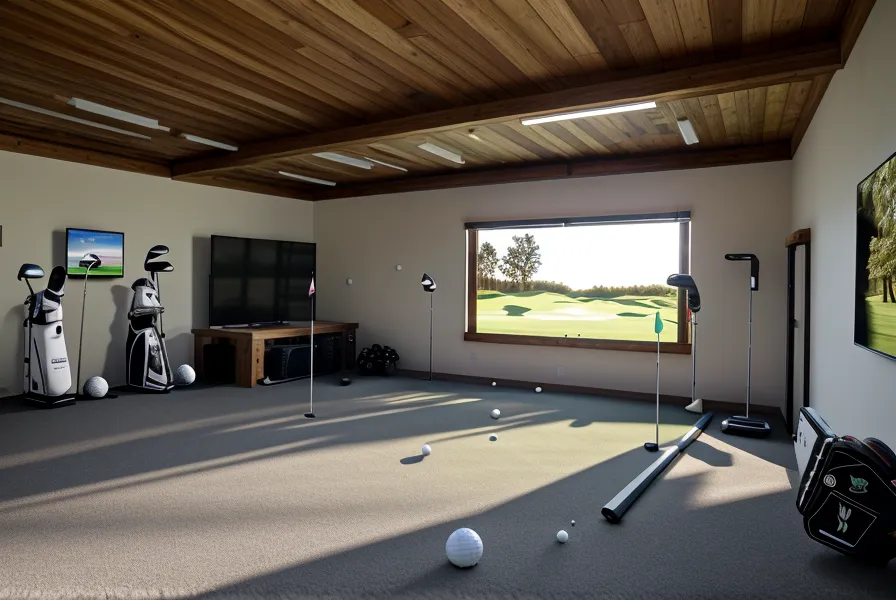
My 9-iron carries 132 yards almost every time I hit it, whether I've stretched for ten minutes first or grabbed the club cold off the rack. That kind of repeatable number is the entire case for an indoor simulator in a two-car garage, and it's also why I keep getting the same questions from neighbors and coworkers about this garage golf setup — the SkyTrak, the mat under it, and whether any of this actually moves a handicap (my wife would like it noted that she's heard these same questions approximately four hundred times). Quick disclosure before any of that: some of the links below are affiliate ones, and if you buy gear through them, I earn a commission at no extra cost to you, money that has more than once gone straight back into a mat I ended up returning.
Does a SkyTrak Garage Setup Actually Move Your Handicap?
Short answer: yes, but not because of anything magical in the software. Before I bought anything, I drove out to the PGA Tour Superstore in Deerfield Township and hit into their demo bay just to see if simulator golf felt anything like real golf. It did, enough that I came home and started pricing out a SkyTrak Golf [Garage Pick] instead of talking myself out of the whole indoor simulator project. What actually moved my handicap wasn't the graphics on the virtual course — it was seeing real numbers attached to real swings, session after session, instead of guessing where my ball ended up somewhere in the rough. Two strokes came off my index since I started trusting that data instead of ignoring it, and I can trace every one of those strokes back to a specific club instead of vague confidence.
How Much Room Does Full-Swing Golf Actually Need?
This is the question I get more than any other, usually from someone eyeing their own garage with a tape measure in hand. The honest answer is that ceiling clearance for a full swing is its own rabbit hole, enough of one that I'd rather send you to the ceiling height reality check than try to cover every joist-and-driver scenario in this piece. What I'll say in passing is that clearance problems show up with the driver first and almost never with the irons, so if you're only worried about wedges and short irons, you're probably overthinking the ceiling question. Depth matters just as much as height, and that's a separate measurement most first-time builders forget about until the club is already in their hand.
Picking a Hitting Mat Without Wrecking Your Joints
Mat questions come in almost as often as ceiling questions, usually from guys who've already had a knee or a hip complain about something. The first mat I tried was a cheap online find that felt like a yoga mat glued to a slab of cardboard, and it lasted two sessions before my elbow started barking at me. I eventually sourced a replacement through the Indoor Golf Shop [Bundle Source], and the foam underneath makes a real difference strike to strike, though exactly how foam density translates into joint feedback is a subject one of the other build logs on this site covers in more depth than I will here. A guy from the Cincinnati Golf Simulator Discord, Nate Grullón, still sends me unprompted opinions on mat thickness some nights well past ten o'clock, and more often than not he's right before I've even finished testing whatever he's talking about.
Launch Monitor Numbers Worth Watching
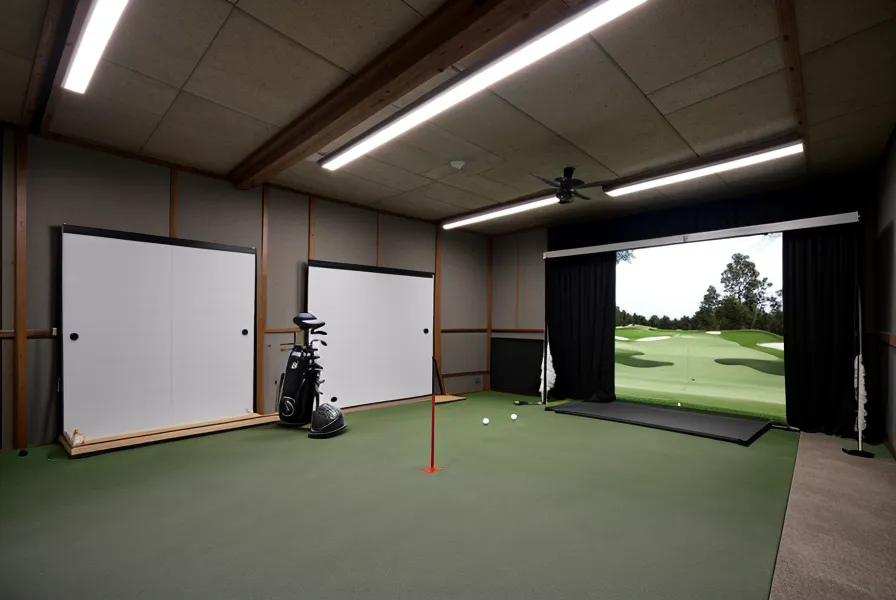
Carry distance by club is the number that actually changes decisions on the course, more than smash factor or spin rate ever will for a mid-handicap player like me. My unit combines a photometric camera with radar to build that number, and how accurate that combination is compared to other launch monitor types is a whole separate rabbit hole I'll leave to the review dedicated to it on this site. What I will say is which numbers I actually open the app to check after a session: carry distance first, then dispersion left to right, in that order, because everything else is closer to noise unless you're fitting clubs for a living. My driver swings around 96 miles an hour, a number I never had a way to confirm before this setup existed, and knowing it stopped me from buying a shaft upgrade a fitter tried to sell me based on swing speeds well above mine.
What About Putting on a Simulator?
Putting on a screen is a strange exercise once you think about it — you're rolling a ball into a wall instead of a hole, and your brain takes a while to stop flinching at where the cup should be. I've been using a SWAG Golf [Putter Upgrade] made from 303 stainless steel, and while I won't claim a putter fixes a stroke by itself, the face feedback on a mishit is honest enough that I notice an open face almost immediately now, which I never did on a real green. Most of my putting reps happen during virtual rounds at Pebble Beach, which needs a steady internet connection to keep the physics synced but gets close enough to real golf that a missed three-footer still stings the same way. If you want the fuller breakdown of how I set up the putting area itself, the golf sim accessories piece on this site covers it in more depth than I can here.
The Impact Screen That Split After Three Buckets
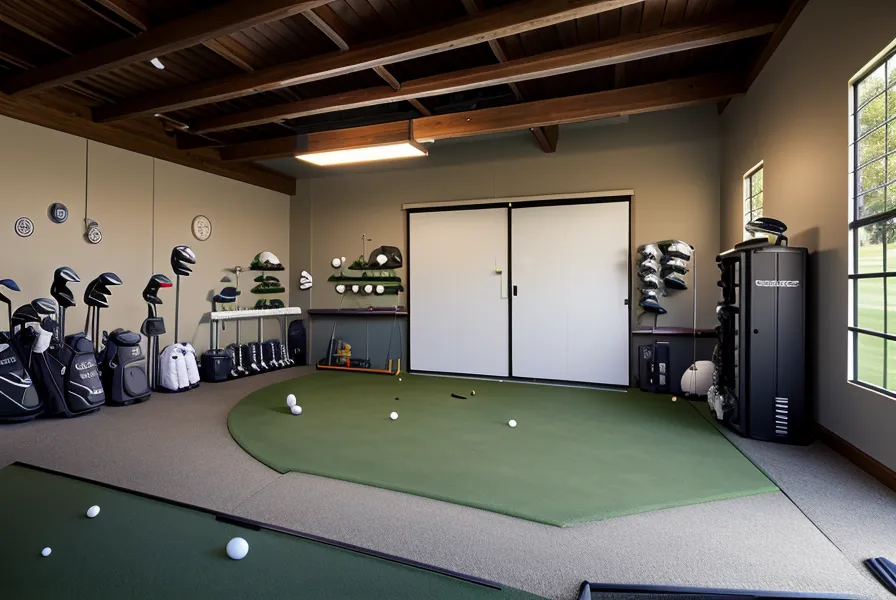
Not everything I've bolted to the garage wall has earned its spot. Early on I hung a foam-padded impact screen panel that looked solid enough in the listing photos, and it held up fine through a few sessions of half-speed wedge shots. The third bucket of real driver swings found the seam. Split it clean, foam showing through like a couch cushion after a dog got at it. Screen durability comes down to how the seams are reinforced more than the fabric weight printed on the box, which is a detail I now ask about before anything else: a thicker screen with a weak seam still tears, and a torn screen sitting a few feet in front of a projector is one bad swing away from an expensive accident.
Enclosure Kit or Open Bay: What Actually Matters
Whether a full enclosure is worth it over an open bay setup mostly comes down to how much stray-shot control and finished appearance you're willing to pay for in cost and assembly time. That trade-off is really its own topic, and I'd rather point you to the piece on this site that weighs it properly than pretend I can settle it in a paragraph. A colleague of mine, Conrad, has been running his own basement simulator since before I started mine, and he talked me out of an enclosure upgrade I was seriously considering last year — his numbers hadn't improved after making the same jump, and he said so before I spent a dollar on it. That kind of pushback from someone who already made the mistake is worth more than any spec sheet I could read on my own.
Lighting, Flooring, and the Other Details Nobody Warns You About
Ambient light washes out a projected image faster than almost anything else in a garage build, enough that it's worth its own dedicated guide rather than a few lines here. The concrete slab underneath everything matters more than people expect too, since most driveways and garage floors are poured with a slight pitch for drainage that can throw off your stance without you noticing why your weight feels off. Flooring is genuinely its own can of worms I'll let another article on this site untangle in full. Stray shots happen no matter how careful you are, so whatever containment you build on the sides and behind the hitting area matters as much as the screen you're hitting into, and I learned that the hard way once a shank skipped past the edge of the screen instead of finding the net.
Is the Investment Worth It
I've put close to $5,000 into this garage, and the number nobody puts in a highlight reel is that something like $800 of that went to gear I ended up returning or tossing outright — the screen panel that split, an early mat, a hitting net that wasn't worth the box it shipped in. If you want a single vendor to handle sourcing so components actually talk to each other instead of fighting each other, a bundle from somewhere like Indoor Golf Shop saves you from making my exact mistakes, even if bundle pricing means paying for a piece or two you might not have chosen on your own. And if you already own a launch monitor and are wondering whether a hardware bump is worth it before you touch anything else, the SkyTrak vs SkyTrak Plus comparison on this site walks through that decision better than I can in a paragraph here. The gear turnover taught me the investment pays off in strokes and knee-friendly practice time, not in any single flashy feature.
If you're ready to stop guessing yardages and start tracking real numbers in your own garage, a SkyTrak setup is the single piece of gear I'd point you toward first — just measure your ceiling twice, and keep an eye on your own version of the mat graveyard before it turns into an $800 line item like mine.