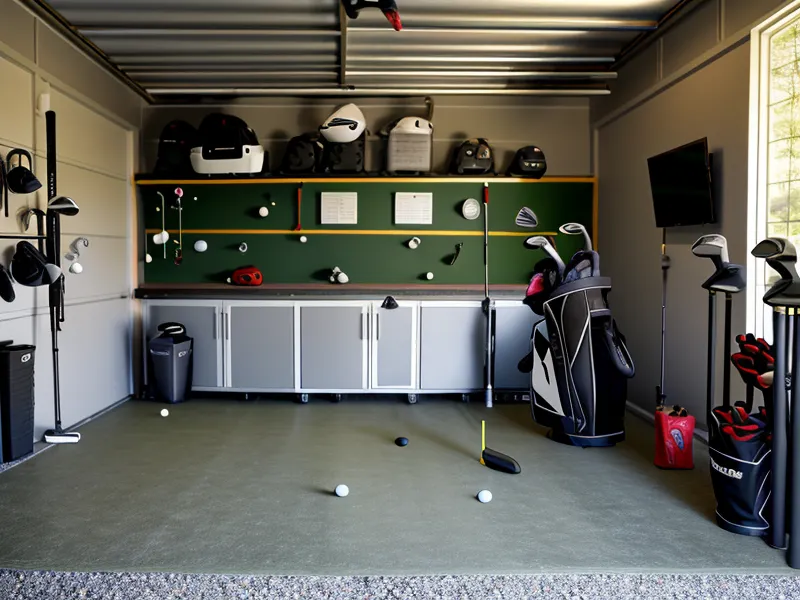
Nine feet. That's the ceiling height in my garage, and it's the single number that decided almost everything else in this two-car golf simulator build, from where the indoor launch monitor sits to how much room the net gets against the back wall. Garage golf runs on constraints like that one measurement more than any gear list wants to admit, and putting practice is usually the first thing that suffers when someone skips straight to buying a launch monitor before checking the basics. This rundown walks through what actually earned its space in my bay and what got boxed back up within a month.
One more thing before the accessory breakdown: every brand mentioned below is something I've hit shots into personally, and a few of the links pay me a commission if you end up buying through them. That doesn't change what I say about the gear that didn't work out.
Ceiling Height Decides Your Garage Golf Simulator Layout
That much clearance is the rough minimum for swinging a driver without clipping a joist or the garage door opener, and it should be the first thing anyone measures before shopping for anything else. Ball position to the back wall in my bay runs close to nineteen feet, which is enough room for a full swing but not enough to be careless about where the net or screen ends up hanging. Ceiling clearance is also what sets the buying order, enclosure width gets picked before screen size, and screen size before net depth, not the other way around. Skip that sequence and you end up staring at a net that doesn't fit the space it was measured for.
Open-bay setups skip the enclosure step entirely and just hang a screen and net from the joists, which saves money but means your garage stops being a garage on the nights you're hitting balls. Either way, the ceiling number comes first. Everything else is downstream of it.
Trusting the Launch Monitor's Data
A launch monitor is basically a kitchen scale for your golf swing, it doesn't care how the shot felt, only what the numbers say happened. My SkyTrak Golf unit has been the one constant in the bay since I set it up, and I've written more about the camera-based accuracy question separately in Why I Chose the SkyTrak Launch Monitor for My Garage Setup if you want the deeper technical comparison. The core numbers any monitor gives you -- ball speed, launch angle, spin - matter less on their own than whether you trust the box enough to actually change your swing based on them, and my driver ball speed has settled into the mid-140s on the SkyTrak, unspectacular but at least consistent shot to shot.
Before landing on SkyTrak, I bought a Garmin Approach R10 and returned it after two weeks because the shot data felt inconsistent every time the garage light got dim in the evening, which in an Ohio winter is most of the time. A reader named Chadwick Obiero emailed me once with his exact ceiling measurement, asking which monitor I'd actually buy today if I were starting from zero, and my answer was the same as the ceiling advice above: figure out your space and your light situation before you fall for a brand, since he'll probably end up buying whatever his favorite YouTube reviewer mentions next month anyway. The data can still catch you off guard when it lines up -- I've watched a 3-wood off the Augusta National 13th tee in the software split the fairway exactly the way it looked coming off the face, and that's the moment you stop second-guessing the box.
Does Your Mat Match Your Joints?
My Indoor Golf Shop SIGPRO mat replaced two cheaper mats that didn't survive contact with a full iron swing, and the difference is close to comparing a yoga mat to a proper gym mat, both look similar until your joints tell you otherwise. There's a full breakdown of what I tried and returned before landing on this one in Best Golf Hitting Mats for Garage Simulators to Save Your Joints.
Concrete slabs underneath a mat aren't perfectly flat either, and leveling the mat and net footings against a sloped garage floor is a separate project I won't get into here. The rubber smell off a newer mat mixes faintly with whatever's been seeping from the garage door track for years, and there's a faint oil stain in the corner of the slab that predates every piece of golf gear in the room, that combination is how you know you're standing in a working bay and not a showroom floor.
Taming the Ball Before It Hits Drywall
Impact screens take a beating that a basic net just doesn't, especially from anyone who hits a lot of spin off their wedges - picture a movie theater screen getting hit by a golf ball at highway speed, over and over, for months. Containing a stray shank is a different engineering problem than absorbing a flush strike, and a screen built for one doesn't always handle the other well. I started sourcing replacement gloves, balls, and the occasional backup wedge from Golf Direct Now once I got tired of driving to a big box store every time something wore out; their price match guarantee tends to beat the chain stores on identical items.
Putting Feel Doesn't Come From the Software
Simulator putting on a foam surface can feel closer to a video game than actual golf, and swapping a generic blade for a SWAG Golf putter milled from 303 stainless steel changed that more than any software update did. The face feedback on a mishit putt is obvious in a way a cheap putter just doesn't transmit. Their limited-drop headcovers are a small thing, but they're the one piece of garage decor that passed inspection (my wife actually complimented one, which does not happen often around here).
A Cart for the Days You Escape the Garage
Real grass still beats the best simulator session, even if my knee limits me to about one round a month right now. The Alphard Golf Cybercart earns its spot folded in the corner of the garage because the auto-follow mode means I'm not pushing a cart on a knee that's still recovering. My neighbor Wes Quaranto still insists the actual course feels different than the bay, and he'll argue that point over a beer for as long as you let him, but he's never once turned down a Tuesday night session when it's twenty degrees outside and the real course is closed anyway.
Comparing the Gear at a Glance
Every piece above solves a different problem, so here's the short version of what each one is actually for and where it landed after real use in the bay.
| Product | Primary Use | My Experience |
|---|---|---|
| SkyTrak Golf | Launch Monitor | Best for tight 9-foot-ceiling garages; great data. |
| SWAG Golf | Putting Feel | 303 stainless steel makes simulator putting feel real. |
| Alphard Golf | Walking Aid | The 'Sidekick' mode is a knee-saver for outdoor rounds. |
Getting the Camera Enough Light to Work
Ambient light changes how well a camera-based monitor and a projector image both perform, and that's a bigger factor in garage builds than most people expect walking in. I put together a full walkthrough of what actually fixed the glare and shadow problems in Best Lighting for SkyTrak Golf Simulator in a Dark Garage, since it turned out to matter as much as any single accessory on this list.
None of this gear works in isolation - the mat affects the net, the light affects the monitor, and the ceiling affects all of it before you even open a box. If you're piecing together a garage bay from scratch, start with the ceiling tape measure, not the credit card, and work outward from there. The links above go to the exact products still earning their space in mine.