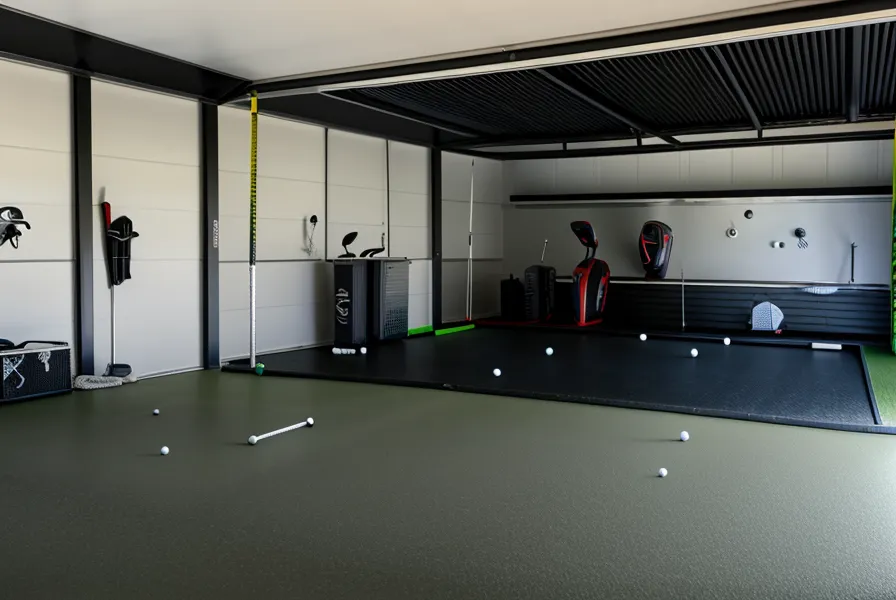
A 3-wood struck clean sounds the same whether it's headed for a real fairway or a projected one, and that single overlap is what convinced me a SkyTrak-based garage simulator could actually replace something instead of just filling time. Two years into running this indoor golf setup, I've stopped treating it as a consolation prize for a knee that can't handle eighteen holes anymore. It's turned into its own category of golf tech — one that happens to double as physical therapy — and the question I get asked most, usually by a neighbor standing at the end of my driveway, is whether the garage version or the outdoor version is doing more for my recovery. Short answer: they aren't competing for the same job.
Before the surgery, weekend golf meant walking the course and calling it exercise. After, my physical therapist wanted low-impact miles instead, and reclaiming those miles meant swapping a golf course for the Little Miami Scenic Trail in Milford — flat, paved, and forgiving on a joint that still complains on hills. That trail became the outdoor half of the comparison: real cardio, real sunlight, zero swings. The garage became the other half, where the swings happened but the walking didn't. Between the two I've put together a rough answer for anyone else weighing recovery time against course time, and it isn't the one I expected going in.
Indoor Golf Versus a Real Walk on the Trail
Walking the trail delivers the cardio and joint mobility a surgeon actually cares about — steady load, no twisting, three or four miles some Saturday mornings when my schedule and my neighbor's don't collide (he spends most Saturdays coaching his daughter's travel soccer team, so we rarely cross paths there). The garage delivers something the trail can't: reps. Dozens of 7-irons in the time it would take to walk two holes, with a screen telling me immediately whether the miss was a face issue or a path issue. Neither replaces the other. The trail keeps the knee mobile between simulator sessions, and the simulator keeps the golf muscle memory alive between actual rounds — a division of labor I didn't plan for but ended up depending on.
What the Launch Monitor Actually Buys You
I've already walked through how I settled on this particular launch monitor in From Knee Surgery to Pebble Beach: A Garage Golfer's Real-World Launch Monitor Setup, so I won't repeat the whole story here. What that piece skips is the fork every garage buyer hits early: buy a bundle, or buy the core piece and build the rest yourself. A golf ball is a small, standardized object; the camera-and-radar combination reading its flight afterward is the expensive part, and that's where the two paths split. Indoor Golf Shop sells full packages — launch monitor, enclosure, mat, and projector bundled together, with a design team that lays out your specific garage before you commit to anything (a full enclosure versus an open bay is its own separate decision, mostly driven by how much noise you're willing to let escape into the yard). That route trades money for the labor of sourcing each piece yourself, and shipping something the size of a full enclosure kit is a freight delivery, not a box on the porch — plan on a helper and a free afternoon. I went the other direction and built around a SkyTrak Golf unit as the core piece, adding the enclosure and mat on my own schedule. The hardware itself runs north of $2,500 before any of the extras, and buying the pieces separately let me spread that cost over months instead of writing one large check.
Choosing a Mat Wasn't Optional With a Rebuilt Knee
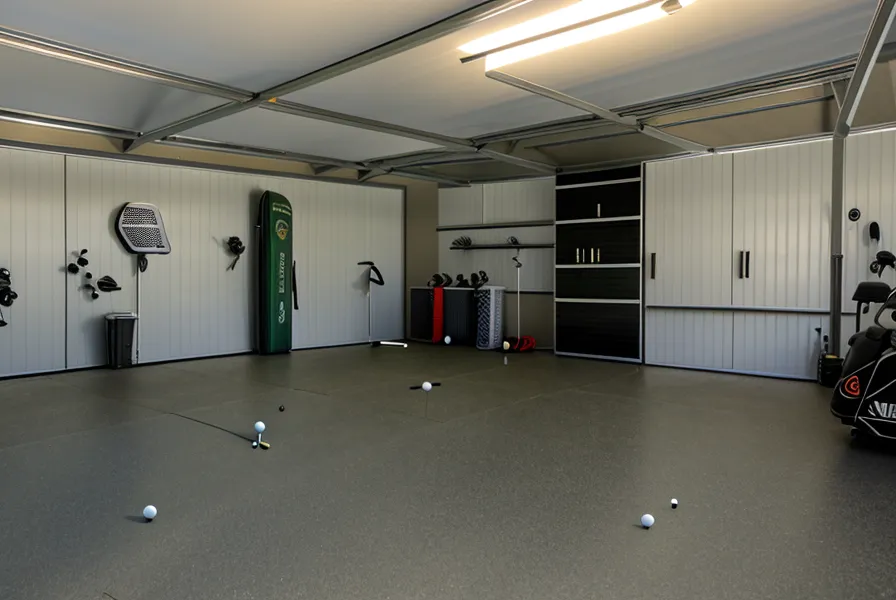
Before any of this lived in the garage, I tried solving the whole problem outdoors with a pop-up hitting cage staked into the backyard. One winter. That's all it lasted before the frame buckled under the first real snow load, which is the actual reason everything moved under a roof instead of some plan I had from day one. Once the cage was gone, the mat became the one piece I refused to cheap out on. Cushioning under a joint that's had surgery isn't a luxury — it's closer to standing on a yoga mat than a doormat, and the give underneath has to be real, not cosmetic (my wife's one condition going in was that the whole project stay confined to half the garage, not creep into all of it). Miss badly enough and the ball catches the steel frame of the enclosure with a flat, hollow bang that sounds nothing like a clean strike, which turned out to be a more honest miss-pattern tracker than anything on the screen. Floor leveling underneath all of it is its own separate project, and whatever the impact screen is rated for is a different purchase entirely — three line items I originally assumed were one.
Trusting the Number Over the Feel
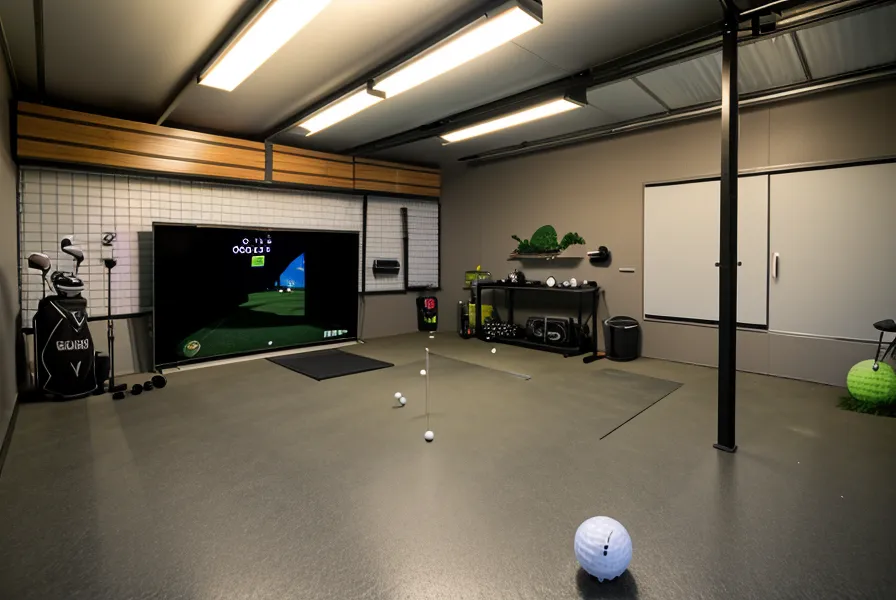
A launch monitor works a lot like a kitchen scale for a cook who's always eyeballed portions — you don't think you need it until the one time your eyeballing was off, and then you need it constantly. The SkyTrak's camera-and-radar combination reads spin and path without requiring a marked ball, and the specific numbers it produces are their own subject, covered in more depth in Tuesday Night Garage Rounds: How My SkyTrak Setup Actually Lowered My Handicap This Year. What it changed for my knee specifically was simpler than any of those metrics: a good strike stopped requiring extra effort to produce. I can still picture a 3-wood off the tee on the simulator's version of Augusta National's 13th, split dead center down the fairway, on a swing that felt almost lazy compared to the result. That gap between effort and outcome is the real argument for trusting the number over the feel.
Launch monitors drift a little from session to session, and a quick recalibration check before playing keeps the numbers honest — a habit that has nothing to do with swing mechanics. The PC pushing the graphics has a completely separate bottleneck, a graphics-card problem that has nothing to do with ball data. And how much daylight leaks into the garage on a given evening changes what the projected image looks like, which is a lighting question, not a launch monitor question.
Does a Bundle Beat Sourcing it Yourself?
For backup gear and the range balls I don't mind losing, Golf Direct Now became my go-to — wide brand coverage, and a price-match guarantee that tends to beat the big box stores on identical items. It's a general golf retailer first and a simulator specialist never, though; their selection of mats, nets, and screens is thin next to a dedicated shop, and shipping got inconsistent the one peak season it actually mattered to me. That's the real trade-off against the bundled route from Indoor Golf Shop above: broader selection and sharper prices on everyday gear, versus a curated package built specifically for a garage bay. Worth reading The Garage Golfer's Guide to Impact Screens before deciding either way — screen tension turns out to matter more than most people assume walking in.
The Verdict: Trail, Garage, and Which Gear Path Wins
Here's where two years of running both sides of this lands. Choose the trail — or whatever your own low-impact route is — when the goal is joint mobility and cardio; nothing indoors replaces that kind of movement. Choose the garage setup when the goal is keeping your swing and your scoring instincts alive on the nights walking isn't an option. On the gear side, choose a bundle if you want one decision and one invoice, and choose the piecemeal route if you'd rather control your own budget and timeline the way I did. My 14 handicap hasn't moved much either way, and I've made peace with that not being the whole point. If you're starting from zero and want the one piece of hardware the rest of this build depends on, SkyTrak Golf is still where I'd point you first — it's the single purchase out of all of it I never once considered returning.