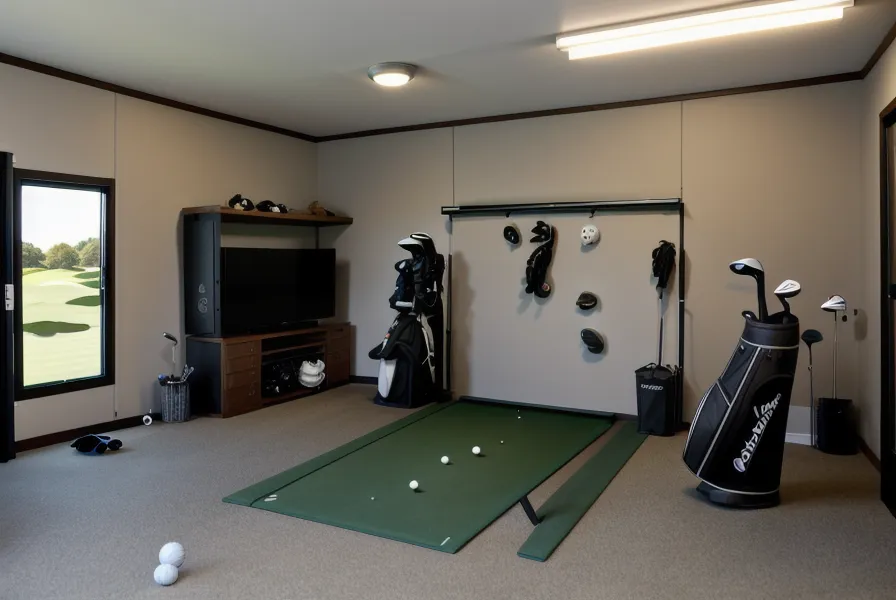
A Doppler radar launch monitor wants roughly sixteen feet of open air behind the ball to read a golf swing cleanly. A photometric camera, the kind SkyTrak runs, wants about three feet of clearance next to the ball and doesn't much care what's stacked against the back wall. That one difference decides more garage simulator purchases than any spec sheet, and it's the reason my own setup looks nothing like what I bought first.
Readers who land on my longer SkyTrak vs Garmin R10 for Small Garage Golf Simulators piece tend to email me some version of the same handful of questions about building out indoor golf gear for a real garage, not a studio demo. I'm not a club fitter or a PGA anything; just an IT operations manager who treats hardware selection like a server migration, and who has tested enough of this stuff now to answer the recurring questions directly.
Where Radar Falls Apart in a Two-Car Garage
Radar was the first thing I tried, mostly because a Garmin R10 from Golf Direct Now ran about a premium price and felt like an easy sell to the household budget committee. Doppler radar tracks the ball by bouncing a signal off it, and in a garage that signal has nowhere clean to go. It clips the tool chest, the lawnmower, and the metal garage door on the way back. I watched identical-feeling swings on the same 7-iron print carry numbers twenty yards apart. Not close. Useless if you're trying to tell a real miss from a sensor glitch.
Budget for shank nets before you budget for anything with a screen; they're there to stop a genuinely bad swing from putting a ball through drywall, not to make your numbers more accurate, and they matter just as much as whatever launch monitor you land on.
What Do These Launch Monitors Actually Measure?
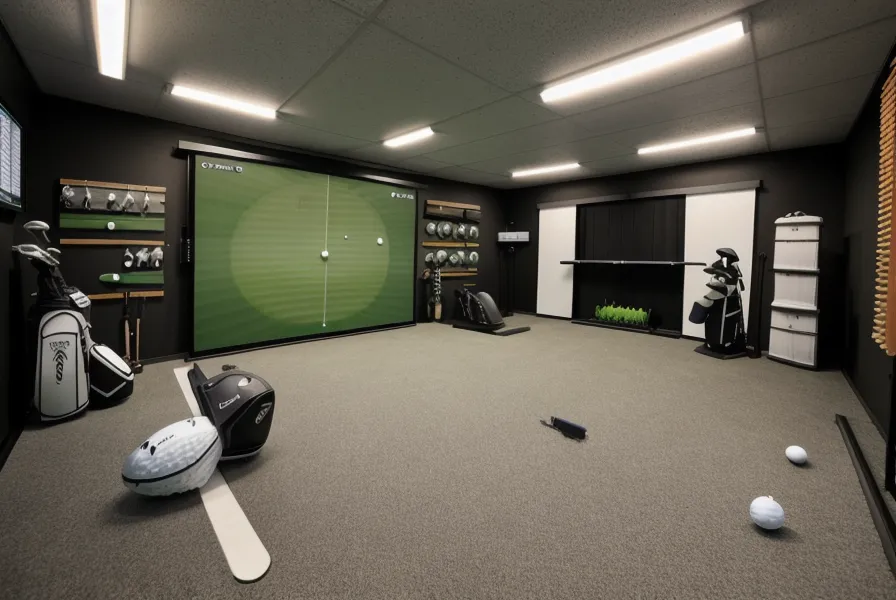
Every unit in this category claims to track the same handful of things; ball speed, spin, launch angle, carry; and the real question is whether those numbers hold steady swing after swing, not how long the spec sheet runs. I laid out exactly what each device measures and how it's tested in a separate launch monitor comparison metrics breakdown, which is worth reading before you buy off a marketing page.
None of this matters if your ceiling won't clear a full driver swing in the first place, and that's a separate math problem worth doing before you shop for sensors at all. A concrete slab that isn't sitting level under the mat will throw off your weight shift before any camera or radar even gets involved. Nate Grullón, a guy I know from the Cincinnati Golf Simulator Discord, is running his entire setup in a single-car bay and posts every square inch he's had to compromise on to make it fit; worth a scroll if your garage is smaller than mine.
Why the SkyTrak Stuck Around
The SkyTrak ST Plus is the one that's still bolted to my garage floor, mostly because the accuracy question stopped being a question; that's really a data-consistency issue, and I cover exactly how consistent this camera's ball-flight numbers are in a separate piece. Swap in a stiffer hitting mat under the same driver swing and watch the ball speed reading climb from 91 to 94 without anything else about the swing changing; that's the mat talking, not the sensor lying to you. A softer mat swallows energy at impact the same way a worse yoga mat does under a burpee, and that shows up directly in the joint feedback through your lead leg on a mis-hit, which matters more to a guy with a rebuilt knee than to anyone else in the room. It's also why Tuesday and Thursday nights in the garage now end with a scorecard from Pebble Beach instead of an ice pack on the couch.
Making the Impact Screen Survive Real Swings
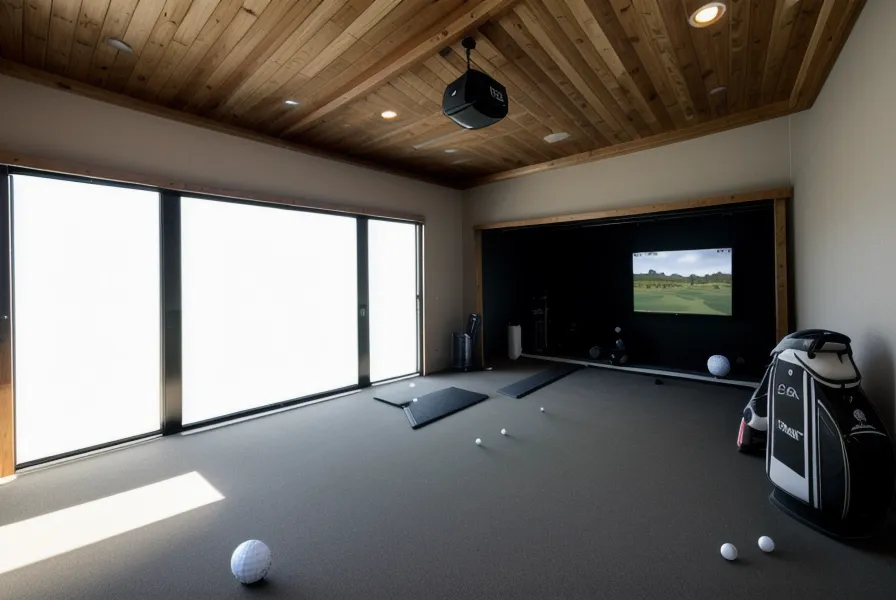
My first attempt at a hitting net and impact screen setup used a foam-padded panel I picked up to save some money, and it split clean along the seam after about three buckets of balls; foam doesn't take a 70-mph impact more than a few hundred times before it gives up. A proper impact screen is closer to a home theater screen built to take a beating instead of just show a movie, and that difference in material is where your money actually goes. Whether you build a full enclosure or just hang a screen and net in an open bay comes down to how much of that space needs to double as a real garage during the day; an enclosure keeps overspray and noise contained, while an open bay tears down faster when the car needs to come back in.
Portable Range Unit vs. Permanent Garage Rig
A launch monitor that travels to the range every weekend favors the Garmin or the Mevo; radar packs down small and doesn't care about calibration between locations. A rig that's staying bolted to one spot favors the photometric setup, full stop, and that's the case for most people building this in a spare garage bay instead of a golf bag pocket. My buddy Conrad Farawell; the coworker who dragged me into this whole hobby in the first place; had this exact comparison ready before I'd even finished asking the question, which is very on-brand for him. I ended up sourcing most of my enclosure and screen materials through Indoor Golf Shop because they'll work out the math for a standard two-car garage instead of you guessing.
The Other Gear That Ends Up on the Order List
It's not limited to the garage, either. I've started eyeing an Alphard Golf push cart for actual course days, since their Cybercart picked up a 2025 MyGolfSpy award for best overall electric push cart and the two-year warranty covers the folding mechanism that kills most carts by year three. I've also caught myself looking at a SWAG Golf putter for the milling alone, though putting on a foam practice mat in a garage doesn't do a 303 stainless steel face any favors.
Is the Whole Build Actually Worth the Money?
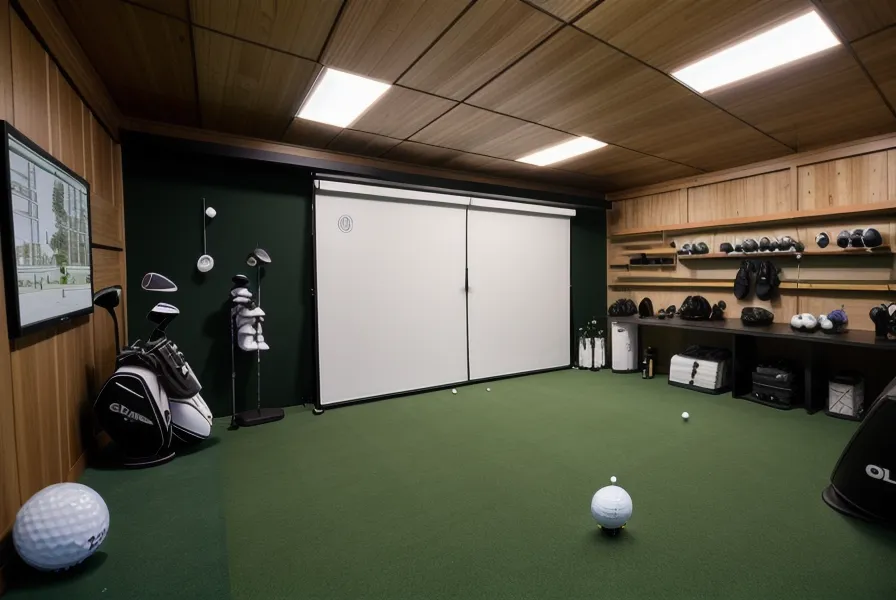
Total spend on this project sits close to five thousand dollars once you count the high lumens projector, the mat, and the SkyTrak protective case I bought after nearly clipping the unit with a practice swing (my wife still doesn't know the projector's actual lumen count doesn't quite match the one I claimed to return). That's a real number to spend on being a 14 handicap in a converted parking spot, and I won't pretend otherwise. Ambient light is its own trade-off with a projector setup, and mine tells on itself; the fan noticeably spins up once the garage warms past the high 60s, working harder to keep the picture readable under the one shop fixture bolted above my hitting bay. With about nineteen feet between the ball and the back wall, radar was never going to get the room it wanted, and the SkyTrak ST Plus just fit the space I actually had instead of the space a spec sheet assumed I'd have.
My wife put an official moratorium on new simulator purchases until December 2026, so this is the setup I'm living with for a while, and I'm fine with that. If you're starting from zero, skip the three-trip return process I put myself through and start with the Indoor Golf Shop bundles; they'll spec the launch monitor, screen, and mat together for your actual garage instead of you guessing room by room. Answer the space question honestly before you answer the brand question, and the rest of this gets a lot easier.