A wedge from Golf Direct Now shows up on my porch in a couple of days. A full simulator enclosure from a specialist shop needs a freight appointment, a signature, and ideally a second set of hands to wrestle the crate through the door. That gap is the whole story of garage simulator gear sourcing, and it took me most of a build to figure out which purchases belong on which side of it.
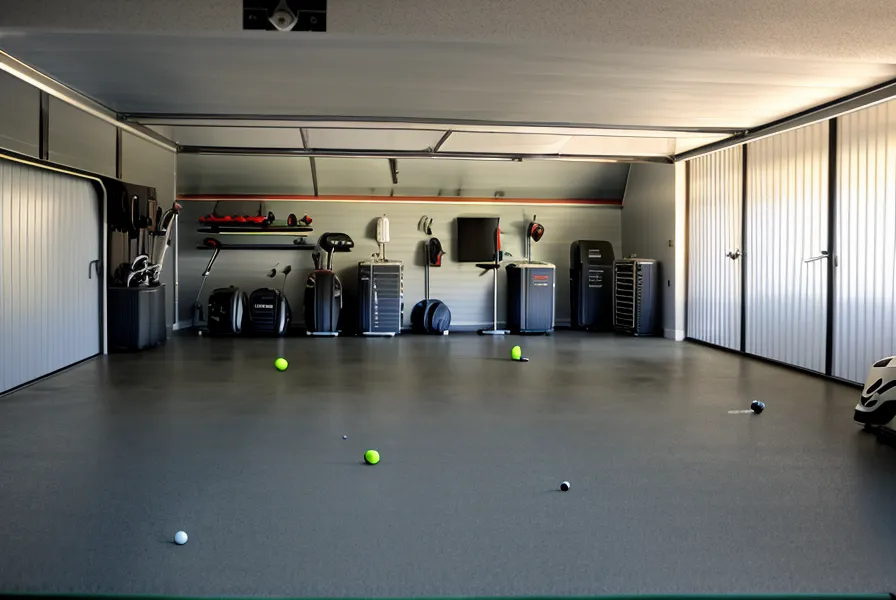
Running an indoor golf simulator out of half a two-car garage in suburban Cincinnati — SkyTrak setup, hitting net, impact screen, three mats and counting — has meant buying from both kinds of retailer more times than my wife would like to count. Some of that gear stuck around. Some of it went back in the same box it arrived in.
Two Very Different Ways to Source Garage Simulator Gear
Patty Szymko, my next-door neighbor, came by the garage last spring — her husband had just retired and she wanted something to keep him busy through an Ohio winter — and led with outlets and square footage before she asked about a single product. That is the right first question, and it is the one most build videos skip entirely.
The stuff that actually determines whether a build works — ceiling clearance for a full swing, whether your slab is flat enough for a mat to sit right, whether you need a real enclosure or just an open bay with a net — I have broken each of those down in their own posts. Once you know what you need, the question becomes where to buy it, and that usually comes down to a specialist like the Indoor Golf Shop or a generalist like Golf Direct Now.
Why the Specialist Route Made Sense First
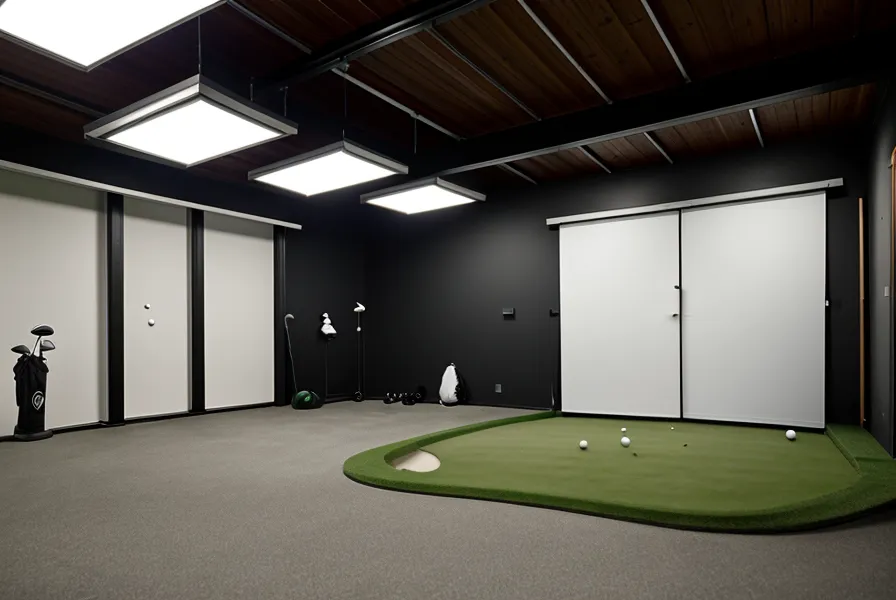
Indoor Golf Shop sells the big stuff as a package — launch monitor, frame, screen, projector — and that bundling matters more than the price tag suggests. Their team has watched a thousand screens go up wrong before mine did, and when my enclosure needed adjusting, someone on the other end of a support ticket already knew the fix.
Once the frame and the screen were actually up, my needs changed fast. I needed backup wedges, because hitting off a mat wears down grooves faster than you would think, plus a real putting setup and a bag that would not fall apart from being dragged across concrete. That is where Golf Direct Now became the default — not for anything structural, just for the accessories that keep the structural stuff useful.
Golf Direct Now does not carry that specialist layer at all, and I found that out the expensive way on something structural I bought off secondhand advice instead of through either store. The shop light overhead used to dip and stutter for a half second every time the projector powered on and pulled through the same extension cord — small thing, but it was the first sign I had more plugged into that circuit than I should have. I mounted the projector itself on a ceiling bracket ordered off Amazon, two thin arms and a wing-nut tension screw, and it held fine through weeks of short chips. The first time I caught a driver clean and sent it high, the bracket sagged half an inch under the vibration and threw the whole image out of alignment. Half an inch. Enough to blur the picture and end that session early.
Screen durability under repeated impact, keeping ambient light from washing out a projected image, and actually containing a shot that goes sideways instead of center are each their own argument, and I have made them in full elsewhere. The structural stuff, generally, is where paying a specialist earns its keep.
What a mat's surface does to your joints over a two-hour session is a bigger topic than this post can hold, especially with a repaired knee in the mix. Before you spend anything, it is worth knowing where the money in a build like mine actually went — I broke it down dollar by dollar in The Real Cost of a Garage Golf Sanctuary: My Two-Year Journey from YouTube Dreams to Reality.
The SkyTrak Setup and the Putter Detour
The center of the whole build is the SkyTrak Golf unit, sitting on its little leveling base and doing for a golf swing roughly what a kitchen scale does for a recipe — no opinion, just a number. How reliably it reads a ball's flight, which numbers on the screen are actually worth watching, and keeping the calibration from drifting between sessions are three separate conversations I have already had in full elsewhere. What matters here is that I trust the number enough to plan a round around it. One Thursday night, about four weeks in, I picked up a 9-iron with no warmup swings, no stretching, no practice takeaway, and the carry landed exactly where I expected it to before I had even looked at the screen.
I had handled a dozen stock putters at the PGA Tour Superstore out in Deerfield Township and none of them felt like anything worth the drive back. So for the putter I went a different direction and looked at SWAG Golf, milled from 303 stainless steel instead of cast off a factory line. Putting on a foam mat will never match a real green, but a flat stick with that kind of feel makes the Tuesday-night rounds feel less like a compromise.
Whether those Tuesday and Thursday rounds actually moved my handicap is its own question, and I answered it honestly in Tuesday Night Garage Rounds: How My SkyTrak Setup Actually Lowered My Handicap This Year.
Why Golf Direct Now Still Gets Most of My Cart
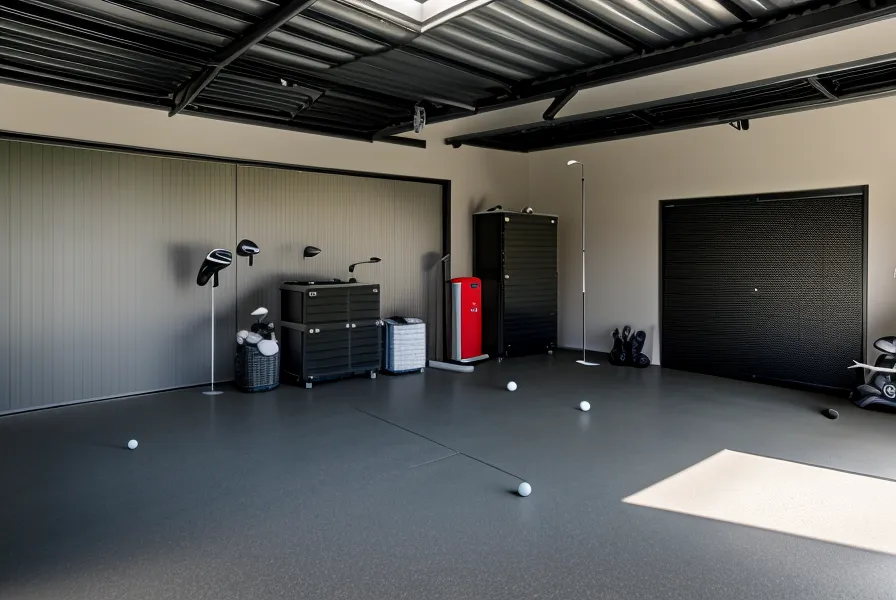
For everything that is not a launch monitor or an enclosure, Golf Direct Now is hard to beat. Their price match guarantee has saved me real money twice, once on a set of wedges and once on the push cart I use on the rare weekend I make it to an actual course — I went with the Alphard Golf Cybercart because the frame carries a two-year warranty against the folding mechanism that kills most carts a season or two in.
Shona Pelletier, my wife's coworker, still texts me gear questions on her husband's behalf because he refuses to touch the Discord threads where the rest of us argue about this stuff. Last month it was which PC could run the simulator software without choking mid-swing — a hardware question I have answered in full elsewhere, but my short answer to her was the one I would give anyone: buy more graphics card than you think you need.
Shipping from a generalist is usually just a box on the porch, nothing like the freight-truck anxiety of a twelve-foot enclosure showing up while you are still deciding where the studs are. My wife banned new simulator purchases outright until December 2026, so these days the accessory orders from Golf Direct Now get filed under maintenance and nobody asks too many questions.
If you are still working out whether your garage can even fit a full swing, sort that out before you order anything — The Ceiling Height Reality Check: Why Your Driver Needs More Room Than You Think covers it in more depth than I can here.
So Which One Actually Deserves Your Money?
Most nights the garage is just me, a driver, and a projected image of Pebble Beach glowing against the back wall, and none of the sourcing debate matters once the software loads. But getting there took a handful of returned boxes and more than one wrong guess about which store to trust with which purchase.
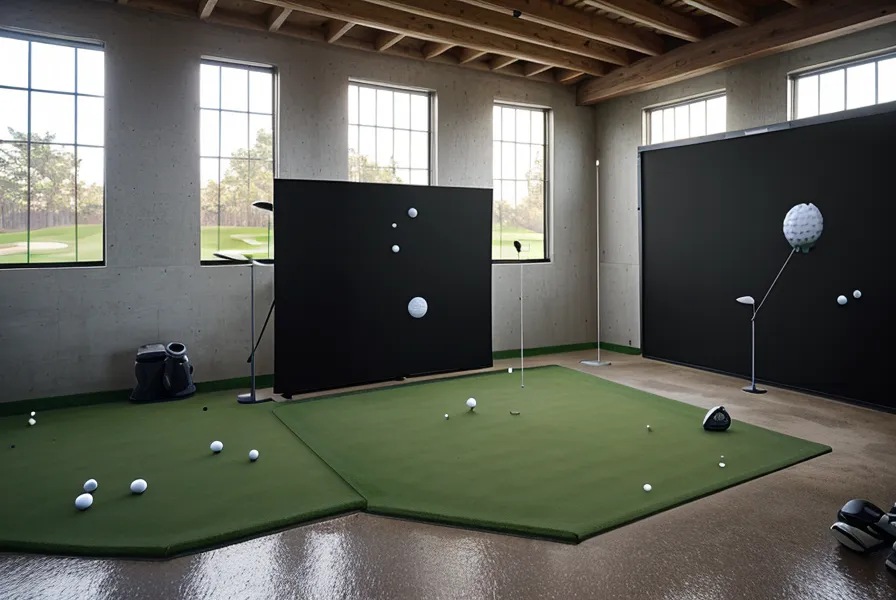
If you are building from scratch, buy the launch monitor and the enclosure from the specialists — you want the tech support the first time the software glitches mid-round and you are out of patience. Once that foundation is down, do your wallet a favor and send everything else, from a backup wedge to your next push cart, to Golf Direct Now.
The one-line version: if you need a single store for irons, bags, carts, and the odds-and-ends that keep a simulator running, Golf Direct Now is the one to bookmark. If you are staring at an empty bay and need a full enclosure with a screen custom-fit to your space, Indoor Golf Shop is worth the extra cost for that first heavy lift. Match the purchase to the risk — get an accessory wrong and you are out a return label. Get the structural stuff wrong and you are replacing a lens, or worse, a knee.
Golf Direct Now
Pros
- + Price match guarantee beats most big-box retailers
- + Massive selection of clubs, bags, and carts for simulator maintenance
- + Frequent clearance deals on previous-season gear
Cons
- ✗ Not a specialist for custom simulator enclosures
- ✗ Shipping speeds can be hit-or-miss during peak seasons