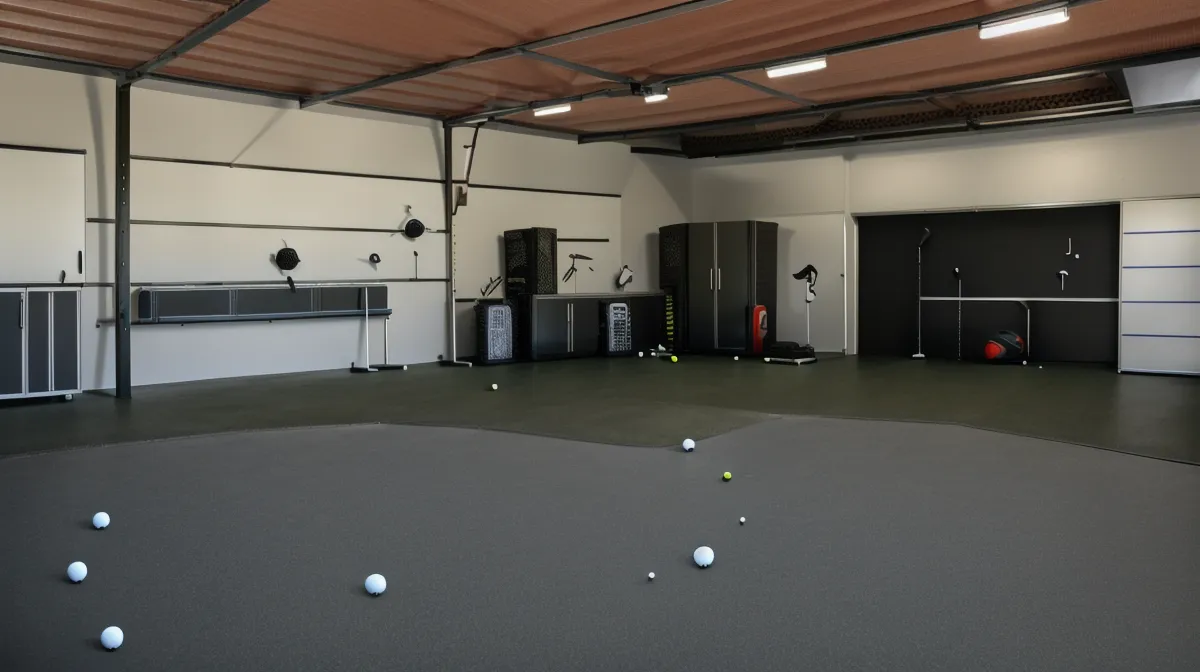
My 7-iron's ball speed reading jumped from 91 to 94 miles an hour on two swings that felt identical, and the only thing that changed between them was the hitting mat under my feet. That's the kind of inconsistency that turns a casual golfer into someone running his own launch monitor comparison instead of trusting whatever number lights up the screen. The original SkyTrak has been the core of my garage golf build since I cleared enough of the two-car garage for a real indoor golf simulator, and the newer SkyTrak Plus claims to close that exact kind of accuracy gap by bolting a second sensor onto the same camera housing. The short version, if you don't want to read seven hundred more words: if the original unit's ball data already keeps you happy, skip the upgrade; if guessed spin numbers on your mishits are steering your practice sessions in the wrong direction, the second sensor earns its keep.
Close to $5,000 has gone into this garage build so far between the launch monitor, the mats, the screen, and one projector experiment I'd rather forget, and none of the vendors mentioned here paid for a good review. Commission comes from whichever links you click and buy through, the price at checkout doesn't change, and the two hitting mats I sent back get named specifically because a build log without the failures isn't worth reading.
The Launch Monitor Comparison Nobody Runs in Their Own Garage
Ball flight data accuracy is what sold me on the original SkyTrak in the first place, long before I cared what my clubhead was doing on the way through impact. That part of the pitch still holds up fine, and I'm not relitigating it here since that's really its own separate conversation. What changed is the club side of the equation: the SkyTrak Plus adds a physical sensor that watches the club instead of just inferring what it did from the ball's reaction.
Photometric Cameras Alone Miss the Club
The original unit runs on a single high-speed photometric camera system. It photographs the ball's dimple pattern through impact and reverse-engineers spin and launch conditions from that image sequence. In IT terms, it's a single point of failure dressed up as a feature: one sensor, one vantage point, and no second source to cross-check against when a read looks strange. It's genuinely clever software, and it's also guessing at what the clubhead did based entirely on what happened to the ball afterward.
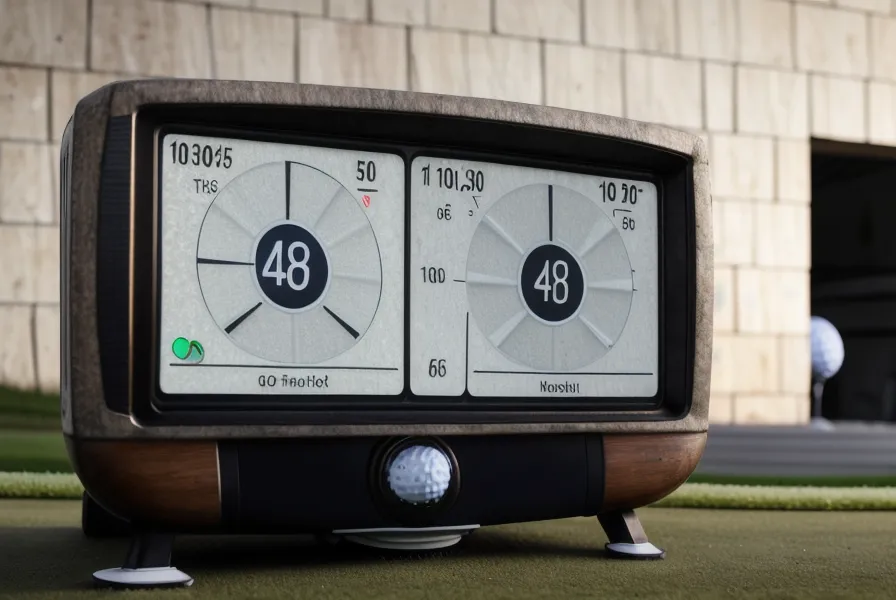
Doppler radar is what the Plus bolts on top of that same camera system, and the pairing works less like an upgrade and more like adding a second camera at a different angle specifically to catch what the first one can't see. Radar tracks the club through the swing. The camera still handles the ball. Neither one has to guess at the other's job anymore. I won't rehash every core metric a launch monitor reports, ball speed, spin rate, carry distance, and the rest, since that list belongs to its own comparison elsewhere.
How Dual Doppler Radar Closes the Gap
Face angle at impact is the detail that actually sold me on the hardware change. The original SkyTrak's software runs a spin-estimation algorithm to back into side spin numbers, and it does fine on a clean strike, but it can get fooled by an odd contact pattern. The Plus doesn't have to estimate anything about the club's face or path because the radar is watching it directly, which means it can tell you the face was three degrees open at impact instead of just showing you the ball curling into the net.
A mat swap is what caused that 91-to-94 jump I mentioned earlier, and that's worth sitting with for a second: the surface under your feet can move the ball-speed number on the original unit almost as much as an actual swing change would. Mat choice matters for more than joint comfort on a bad knee day, it turns out it can shift the sensor reading too. It's not unlike a kitchen scale that reads a different weight depending on which counter you set it on, still technically working, just not something you'd bet a diet on. Radar tracking doesn't erase every variable in a garage setup, but it does take the guessing out of the club-data half of the equation.
Does the Plus Actually Fix Off-Center Strikes?
Toe strikes are where I spent most of a session comparing the two systems side by side. Every mishit sent the same dull thump into the screen, followed by a quick slap of echo snapping back half a beat later, and every time the original unit's spin numbers wandered a little further from what the ball actually did in the air. The Plus stayed consistent strike after strike, because the radar isn't relying on a clean dimple picture to make its call.
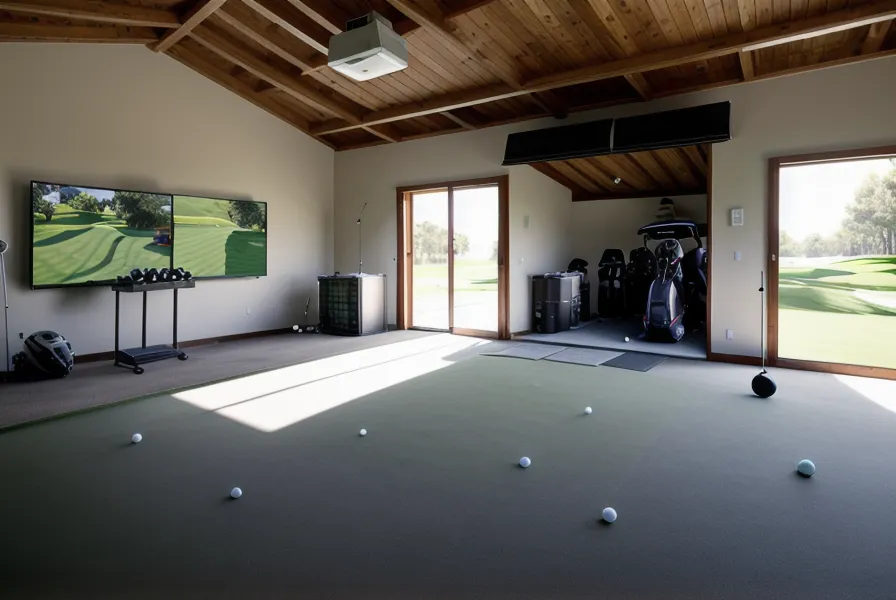
Knowing that an open face caused the slice, instead of just watching the ball vanish into the virtual trees, is the difference between a practice session that fixes something and an hour of exercise that doesn't. For a 14 handicap who mishits more often than he'd like to admit, that distinction alone is worth more than any of the software's course library.
Where the Upgrade Doesn't Matter
Bundles are the easier route if piecing together a launch monitor, mat, and enclosure yourself sounds like more stress than it's worth, and the Indoor Golf Shop packages handle that sourcing headache for you. My next-door neighbor Patty Szymko, shopping for a setup to keep her newly retired husband occupied through an Ohio winter, showed up on her second visit with her own tape measure and checked the ceiling clearance before I could even offer mine. She was right to check it first. You need enough overhead room to swing a driver without clipping a joist, and I've already written up the math on that in the Ceiling Height Reality Check rather than repeating it here.
Backup gear and accessories have come from Golf Direct Now a few times, mostly on price match, though their simulator-specific selection is thinner than the specialists. Smaller radar-only units get asked about constantly too, and I've already run that comparison in the SkyTrak vs Garmin R10 piece rather than repeat it here. Camera-based tracking still fits a tighter garage better than a pure radar unit that wants fifteen-plus feet of runway to read the ball correctly.
A ceiling-mounted projector bracket I grabbed off Amazon is the purchase I'd take back if I could. It sagged a good half inch the first time I caught a driver high on the face, tilting the picture just enough to throw off every yardage read for the rest of that session. Fixed now. Not without a few choice words directed at a bracket, though. Enclosure versus open bay, whether your slab is level enough to trust the mat sitting on it, what stops a shanked iron from putting a hole in the drywall, how much ambient light your projector can fight before contrast falls apart, and how long an impact screen actually holds up under regular driver strikes are each their own decision, and none of them get solved inside a launch monitor comparison.
So, Is It Worth the Money?
Owning the original unit already and treating the sim as a fun way to spend a weeknight is a fine reason to leave things alone; you're still getting the large majority of the experience. Buying new, or running out of patience with spin numbers that don't match what you felt at impact, tips the scale toward the Plus. Club path and face angle without sticker dots or an alignment ritual is a real quality-of-life upgrade for anyone actually trying to fix a swing instead of just enjoying a round indoors.
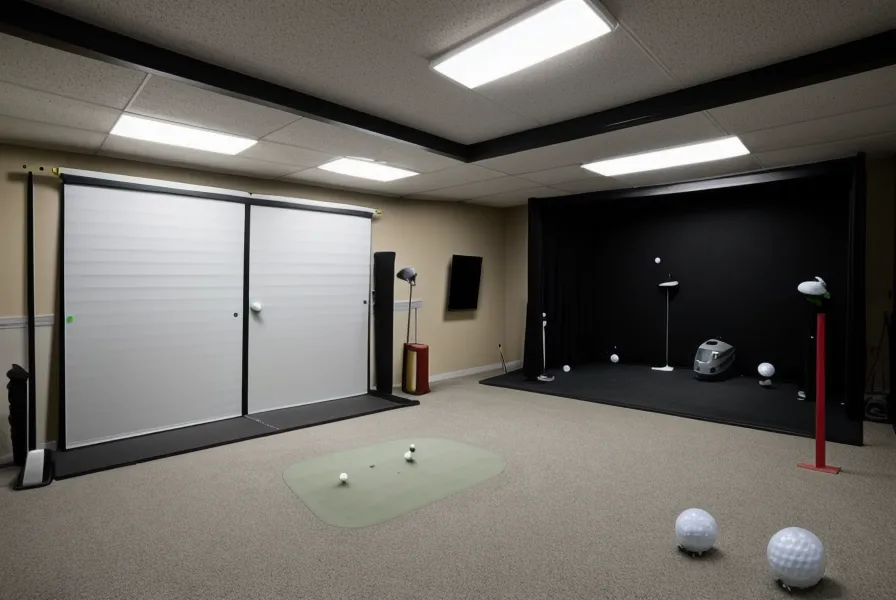
My own build is on a gear-buying freeze through December 2026 (my wife's rule, non-negotiable, no matter how good the sale), so this is research for the next round rather than a personal endorsement of my own cart. Anyone weighing the full cost of a setup like this, launch monitor, mat, screen, and every accessory in between, should read through The Real Cost of a Garage Golf Sanctuary before deciding which version to buy, because the launch monitor is rarely the only number that matters. Measure the ceiling twice, decide honestly how often you actually miss the center of the face, and let that answer, not the marketing, pick between the two units.